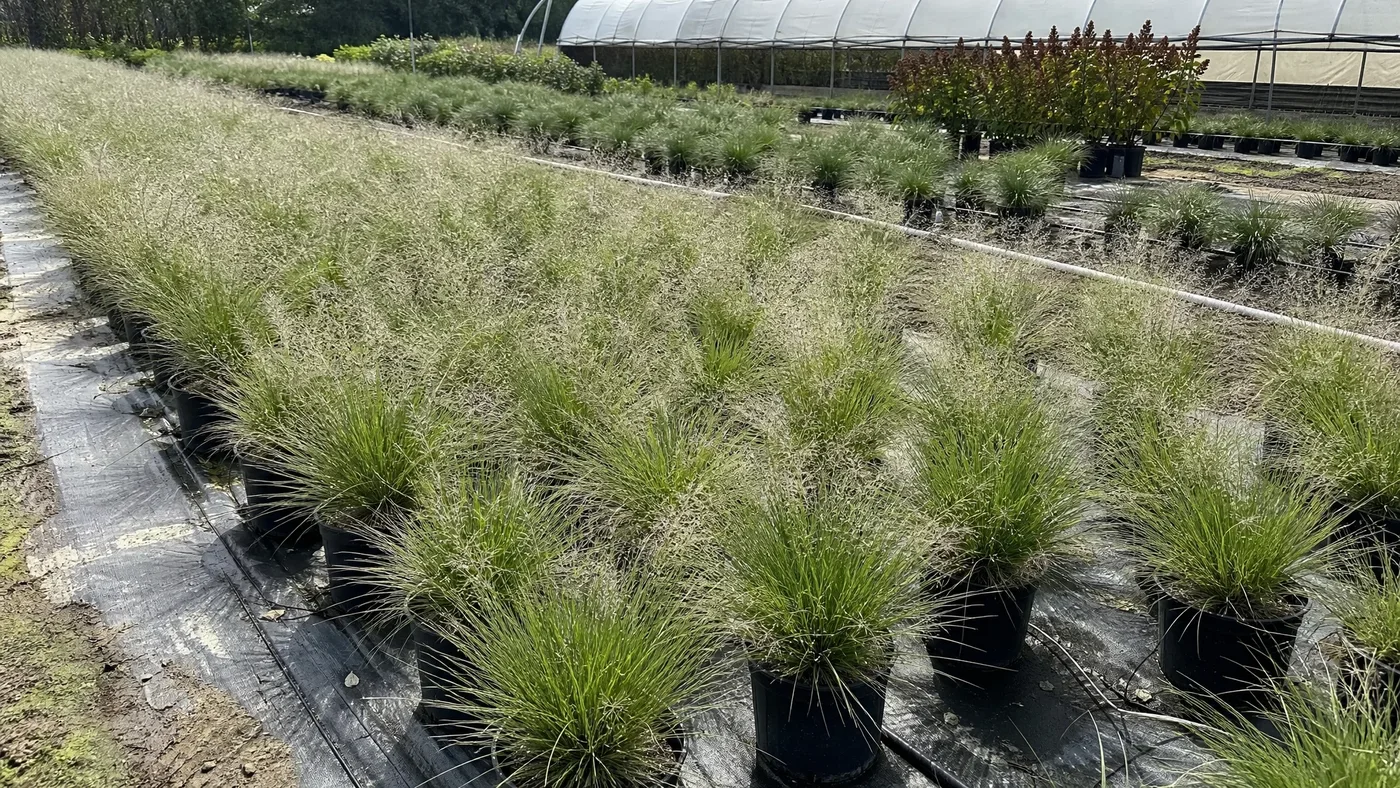
Is There Really a White Muhly Grass?
At a garden club meeting in October, someone holds up a phone photo of a pale, feathery plume and says it has to be a sick pink muhly grass. The timing is no accident. Fall is when muhly grass blooms, and anything that breaks from the pink haze people expect gets noticed and doubted.
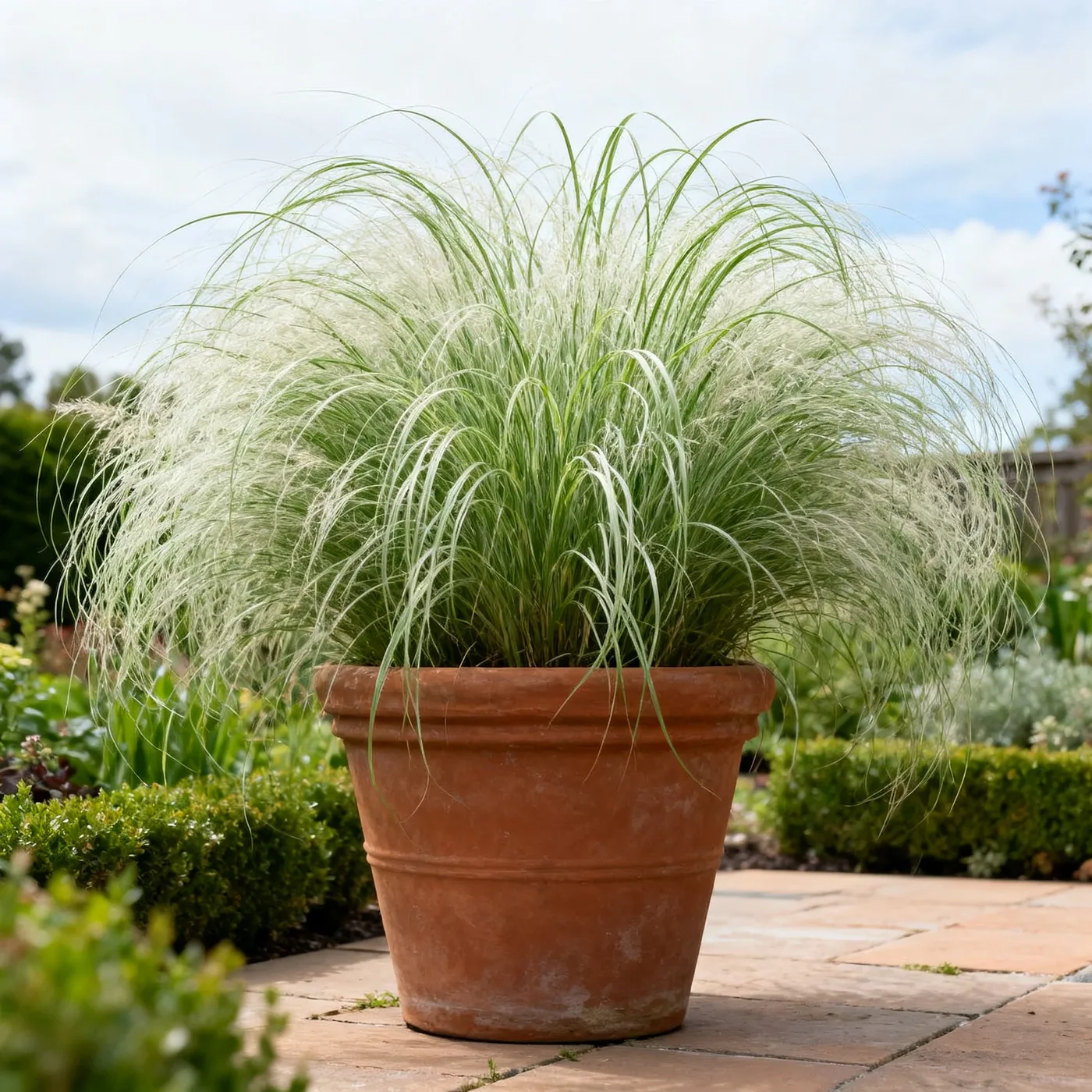
The doubt is reasonable, but the plant is real. White Cloud is a named cultivar of the same species, and a wrong guess costs more than usual because a clump takes seasons to fill and stock is hard to find. Buy a pink plant by mistake and you lose years, not weeks.
Below, you'll find out all about where White Cloud came from, including the evidence that it is a stable cultivar, why photos and nursery benches favor pink, and how to budget the years and dollars for a full clump of white.
A Doubt Every Pink Muhly Grass Grower Has
The photo gets the same guesses at every meeting: it is diseased, the tag was wrong, or the sun bleached it. One of the most common questions we get is whether a white plume means the plant is dying. The guesses make sense once you picture what most people have seen, which is the species with its airy pink-to-purple plumes hovering over green foliage in fall.
Even the species is not one fixed shade. The plume runs pink, purplish red or purplish gray, so people expect a color range, but nobody expects white. Each of the three suspicions deserves a direct answer.
Disease. A sick grass looks sick, with thin growth, spotting or dieback. A White Cloud in bloom is a healthy clump whose plumes simply open white. The cultivar is even resistant to tar spot, which is an odd trait for a plant that is supposedly diseased.
A mislabel. Mislabels happen at every kind of seller, and we cover the test that catches one later in this guide. A pink plant sold as white gives itself away the first September it blooms.
Sun fading. Pink muhly does age, but the plume dries to a light buff. That is a tan, not white, and it happens after the plume has opened. White Cloud opens white.
How White Cloud Muhly Grass Was Found and Named
Cultivars usually begin with one plant that looks different from its neighbors. A grower notices it, keeps it apart, multiplies it by vegetative means so the trait carries over, and gives it a name. White Cloud follows that pattern: a white-flowering form of Muhlenbergia capillaris that was selected and propagated as its own plant.
We can't give you a finder, a year or a field. The sources we trust don't record those details, so we won't make them up. What they do record is more useful for a buyer, and it is the name's standing today.
What the Cultivar Name Promises
The species has three named cultivars: 'Lenca', 'Regal Mist' and 'White Cloud'. A name on that list means the plant is recognized as a distinct selection, not a one-off oddity. UF/IFAS Charlotte County describes it as identical in all the features to the pink version apart from the white flower head.
What It Does Not Promise
Identical does not mean interchangeable on a site plan. The white flowers bloom after the pink ones, so the show comes later than the pink plants in your neighbor's yard. Size is also stated differently for the two. Clemson rates White Cloud at 1-3 feet high and wide, while NC State says the species can reach 4 feet tall and 3 feet wide. We treat those as ranges to plan around, not promises, and our guide on how big White Cloud really gets goes into the numbers.
Proof That White Cloud Muhly Grass Is Genuine
Plant a White Cloud beside a pink muhly in the same bed and the argument ends in September. Same sun, same soil, same water, and the plumes still open in different colors. Disease and sun bleaching don't behave that way, because they can't make one plant of a matched pair reliably white. These are the points that settle it.
- NC State describes the cultivar as having upright, open, airy white flowers that bloom after pink, so the color comes with its own schedule.
- That same entry notes resistance to tar spot, a trait that belongs to a healthy cultivar, not a failing pink plant.
- Clemson's rain garden factsheet lists White Cloud separately from the species, with its own size range and clouds of white flowers in September.
- An aging pink plume dries to light buff, so a bleached pink would look tan, not clean white.
- Apart from flower color, the plant matches the pink form, which fits a selection and not a different species.
The practical test is simple. Keep the tag, note the planting date and watch the first plumes open. Pink on a plant sold as White Cloud means a wrong plant, and you should take it back with a photo.
One caution. Cultivar status is about plants made by division or cuttings, and seed is a separate question that we answer in our guide on whether seed-grown White Cloud stays white. For a fuller look at the color and habit differences, see our comparison with pink muhly grass.
Why Photos Rarely Show White Cloud Muhly Grass
Search for muhly grass and scroll for a minute. Nearly every image is a pink cloud, and the white one, if it shows up, appears captioned as a curiosity. That pattern comes from how plants get photographed and listed, not from how common white plumes are in real gardens.
Listings Default to the Species
The species is the headline plant, so its photo becomes the generic image for anything called muhly grass. A listing for the cultivar often borrows that same picture because it is the one on file. The reader sees pink, buys on the photo, and later feels doubt when white plumes show up on the cultivar they actually ordered, or pink ones on a plant that was never White Cloud.
Timing Works Against the Camera
White Cloud blooms after the pink forms. Its white flowers open in September, and the species as a whole blooms September through November. A photographer who shoots when muhly grass peaks in the pink range will miss the white plumes, which come into their own later.
White against a pale sky, fence or gravel also reads flat in a quick phone shot, while pink glows. The plant does not look worse in person. The camera simply favors one color over the other. Our guide on when White Cloud blooms and how long it lasts helps you time a visit to see it at its best.
Reading a Listing Before You Buy
Look for the cultivar name in quotes after the botanical name, 'White Cloud', and not just "muhly grass". If the photo is pink and the text says white, ask for a photo of the actual stock. A seller who can't supply one is telling you something.
Why Nurseries Stock so Little White Cloud Muhly Grass
Picture one bench of pink muhly grass and next to it a single tray of White Cloud. The pink bench is easy to fill and easy to sell because every buyer already knows what it looks like. The white tray took longer to build and may sell out before buyers have seen a photo of it. That imbalance is the whole supply story.
Division Sets the Pace
Muhly grass is a clumping grass, and a cultivar has to be multiplied from existing plants to stay true. For White Cloud that mainly means splitting mature clumps, so every new plant depends on a plant that already took seasons to fill out. A grower cannot rush that without shrinking the parent clump. Bench space tied up for slow results is also bench space not earning money, so many nurseries choose not to carry it.
Thin Demand Keeps Supply Thin
The pattern feeds itself. Few photos mean few shoppers asking for the white plant, and few requests mean nurseries order fewer. We divide and grow White Cloud ourselves and list it as plants are ready, so you will sometimes see it unavailable at our shop too.
For you, the lesson is to treat the plant as something you reserve, not something you grab on a spring weekend. A seller that has it in stock in March is the exception, and a seller that has it in stock all year deserves a question about how they produce it.
Budgeting Years and Dollars for White Cloud Muhly Grass
Take a border and measure it. At a spacing of 2-3 feet, every 10 feet of border takes three to five plants, depending on whether you plant tight or wide. That arithmetic is the real budget, because the number of plants decides the dollars and the spacing decides how many seasons you wait.
What to Expect on Price
We don't quote prices here because they vary by seller and container. Ask for the cost per plant at each container size and compare it with pink muhly grass. Expect White Cloud to cost more, since supply is limited and each plant starts from division. Our guide on buying White Cloud and choosing container sizes explains what extra money gets you.
How Long a Full Clump Takes
Sources disagree on growth rate, with NC State saying medium and others saying fast. Plan on several growing seasons and treat anything faster as a bonus. Planting at 2 feet fills the bed sooner but needs more plants. Planting at 3 feet saves money and leaves gaps for a season or two.
Whichever way you go, don't judge color on a first-year plant that has barely bloomed. Give it a full season and read the plumes then.
Ordering Ahead
This table sets out the decisions to make before you order, and the trade-off in each.
| Decision | Plan | Trade-off |
|---|---|---|
| Container size | Larger pots cost more per plant | Saves time but not many plants |
| Spacing | 2 feet is tight, 3 feet is wide | Tight fills sooner, wide costs less |
| Order timing | Reserve in winter | Stock sells out before spring |
| Pink backup | Decide before you order | Pink plumes are not a substitute |
Trusting the White Plume You See
You can now believe three things. White Cloud is a real cultivar, listed beside 'Lenca' and 'Regal Mist'. Its plumes open white after the pink forms, so a pale plume in a garden in fall is not a disease. And the scarcity is a matter of slow division and thin demand, not proof the plant doesn't exist. Here is a plain year to follow.
- Winter: Ask sellers for 'White Cloud' by cultivar name and reserve your plants.
- Early spring: Choose a spot with full sun, meaning 6 or more hours of direct light, and decide your spacing.
- Spring: Plant when the weather settles and water new plants until they establish.
- Summer: Leave the clumps alone. The species tolerates heat and drought once it is settled.
- September: Watch for plumes and compare them with any pink muhly nearby, noting the date.
- Next October: Confirm white plumes. If they are pink, return the plant with your photo.
White Cloud Muhly Grass
Nursery-grown White Cloud Muhly Grass in sizes from Quart, shipped to your door.
From $39.99
Shop Now →We grow White Cloud on our farms in full sun and well-drained ground, the way it likes it. Customers come back to us for plumes that open white as promised, and as a small business of growers who raise every plant we sell, we'd be glad to have you start with one of ours.