Will White Cloud Muhly Grass Grown From Seed Stay White?
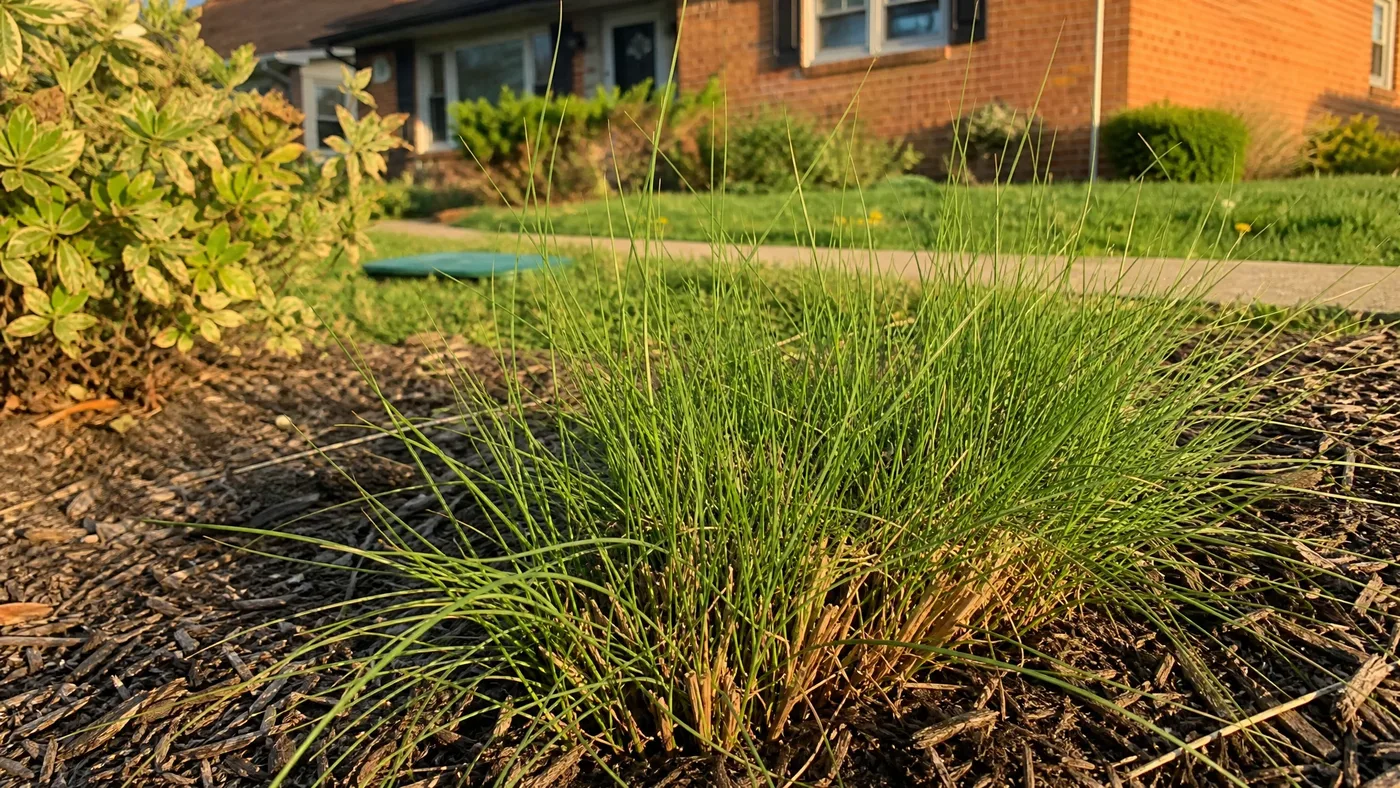
Look at the base of a White Cloud muhly grass in early spring and you can read how the plant works. Each clump is a crown at soil level. Every year that crown sends up fresh tillers, the narrow shoots that become the leaf blades, while fibrous roots push out and down beneath them. The clump widens by adding tillers around its edge, not by wandering across the bed.
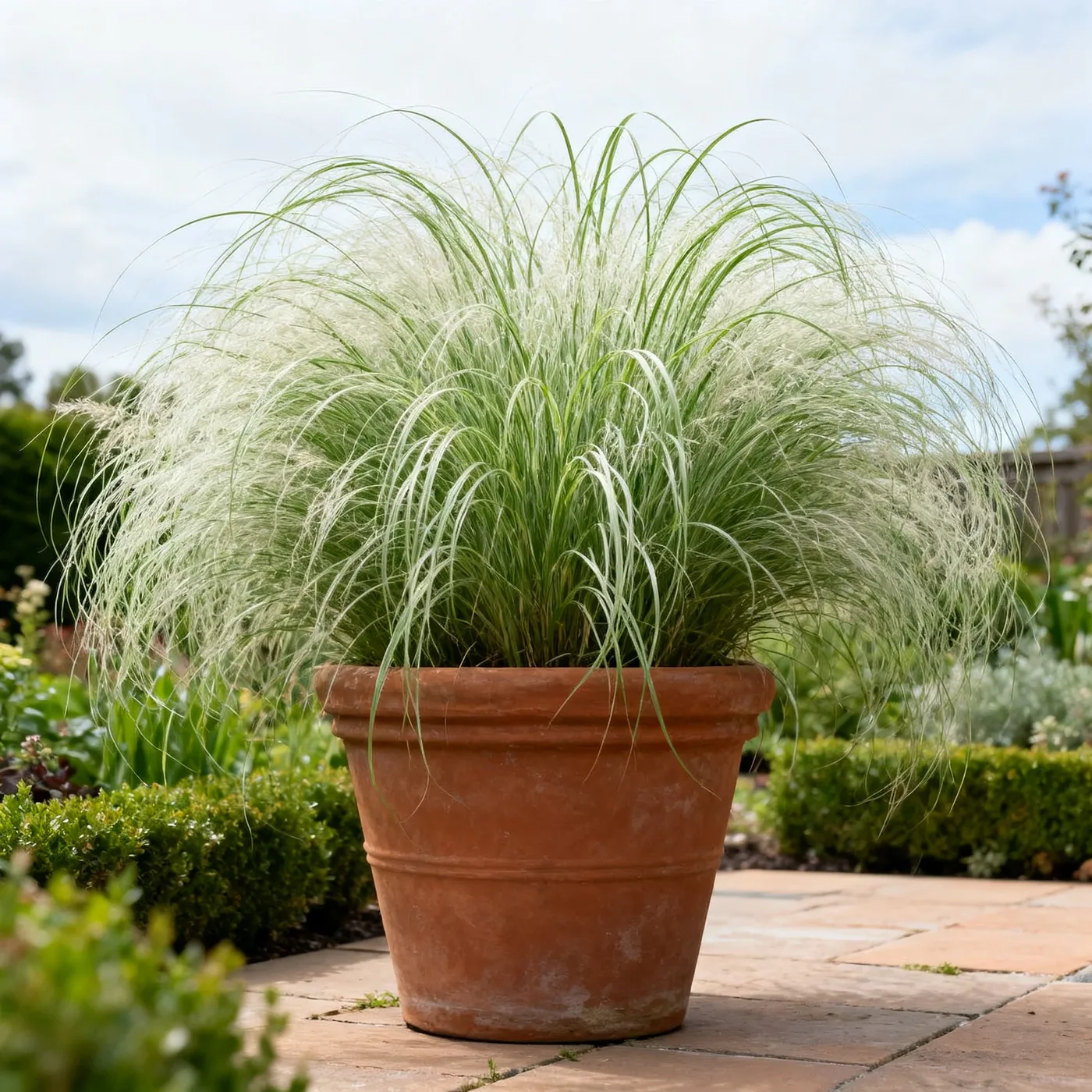
That habit explains the question we hear most from customers, which is whether seed gathered from a white plant will come up white. Not reliably, and the reason sits in how a named selection is made and kept.
Below, you'll find out all about growing White Cloud from seed, including why seedlings vary in plume color, how to divide a clump for an exact copy, and how to collect, sow and raise seedlings through their first year.
How a Muhly Clump Builds Itself
Muhly grass is a clumping bunch grass, so everything begins at one point: the crown, a dense knot of tissue sitting at the soil surface. White Cloud keeps the habit of its species. Clemson lists the cultivar at 1–3 feet high and wide, and a mature clump fills that space from the middle outward without sending runners into the next bed over.
The Crown and Its Tillers
Each spring the crown produces new tillers, and each tiller carries its own leaves and, later in the year, its own flower stalk. In an older clump the center often thins while the edge keeps pushing out new growth, which is why dividing muhly periodically helps renew its vigor. The crown is the part of the plant that matters when you want more of it.
Fibrous Roots Below
Under the crown sits a mat of fibrous roots, many fine strands rather than one deep taproot. That mat is why a clump can be lifted with a spade and cut into pieces without much drama. Each piece keeps growing as long as it holds some crown and a share of roots. The same root mat is part of why an established plant handles dry spells so well.
Every tiller in that clump belongs to one plant with one set of genes, and that single fact decides almost everything else in this guide.
Why White Cloud Muhly Grass Seed Won't Breed True
White Cloud is a selection, one white-plumed plant noticed within a species whose flowers are normally pink, purplish red or purplish gray, and then kept going by propagating that plant. The University of Florida's extension describes it as identical in all the features to the pink version apart from the flowers. The white is one trait riding on an otherwise ordinary muhly.
Pollen Brings in the Other Parent
A seed forms when pollen fertilizes a flower, and grasses scatter their pollen on the wind. That pollen may come from the same clump, from a neighbor, or from a pink muhly down the street. Each seed then gets a fresh shuffle of genes from both parents, so no two seeds are guaranteed to match the plant they fell from.
A division is different. It is a piece of the original crown, so it carries the original genes untouched. This is the whole reason named grasses are multiplied by dividing and not by seed.
Easy to Sprout Is Not Easy to Keep White
The species is easy to start from seed, and that is true of pink muhly in general. Germination is rarely the problem. Color is.
Listings for "white muhly grass seeds" often imply the white comes along with the seed. We read that line with caution. Seed from a white plant can give white, pink or something in between, and we know of no reliable ratio to promise you.
What Seedlings Tend to Look Like
Customers usually tell us their seedlings came up a mix, and that matches what the genetics predict. The plants will look like muhly grass in every way that counts, with the same fine, arching leaves and the same airy fall plumes. The plume color is where you see the spread, since the species itself runs from pink to purplish red to purplish gray.
The table below lists what a flat of seed-grown plants may hold. Treat it as a range of possibilities, not a forecast of percentages.
| What you may see | What it likely means |
|---|---|
| Clean white plumes | The seedling kept the white trait and resembles the parent |
| Pink-tinged plumes | A blend between the white parent and the species |
| Deep pink or purplish plumes | A reversion to the usual species color |
| Different colors within one flat | Normal for seed-grown plants |
| Taller or looser clumps | The seedling does not follow the cultivar's 1–3 foot size |
Timing Can Be a Clue
White Cloud's airy white flowers bloom after the pink ones, typically in September. A seedling that colors up well ahead of its siblings is worth a second look, since it may be pink. Do not rely on this alone, because the plumes will tell you the truth once they open.
A pink seedling is not a failure. It is a perfectly good muhly, and our comparison of White Cloud and pink muhly shows how the two look side by side. It just is not the plant you set out to grow.
Dividing for a True White Cloud Muhly Grass
If a white plume is what you want, division is the only dependable route, because every piece you cut is the same plant as the clump it came from. Clemson says muhly should be divided during the spring or early summer to renew vigor. We lean toward early spring, when new growth is just starting and the roots have a full season to settle before fall bloom.
Steps for Dividing a Clump
Work on a cool, overcast day if you can, and have the new planting holes ready before you lift anything.
- Cut last year's foliage down first, as described in our guide to cutting back White Cloud muhly grass, so you can see the crown.
- Water the clump the day before. Moist soil holds to the roots and keeps the crown from crumbling.
- Dig a circle around the clump, just outside the edge of the tillers, and lever the whole mass out of the ground.
- Cut it into sections with a sharp spade or knife. Each piece needs several tillers, some crown and a good share of fibrous roots.
- Discard any woody, thin-centered pieces and keep the vigorous outer growth.
- Replant each division at the same depth it grew before, spaced 2–3 feet apart, and water it in well.
After the Cut
Keep the new divisions evenly moist for the first few weeks, then let them settle in. Our planting guide, how to plant White Cloud muhly grass, covers site and soil in detail. If you have no clump to divide, a nursery-grown White Cloud is the same kind of true plant from the start.
Gathering and Sowing Seed Anyway
Some people want to experiment, and that is a fair reason to sow seed. You may get a white one, you may get a pink one that surprises you, and the cost is a few weeks and a flat of mix. Go in expecting variety and you will enjoy it.
Collecting the Seed Heads
The plumes first show color, then fade, and as the seed ripens they turn tan. The seed fruits are available from September through November, and the seeds are tiny, dry and hard. Wait for tan, dry plumes on a dry day, then clip them into a paper bag. Label the bag with the plant they came from, because you will want to know the mother later.
Keep the bag in a cool, dry spot over winter. Skip plastic, which traps moisture and invites mold.
Sowing the Seed
Because the seed is so small, the main risk is burying it. Sow in spring once the weather warms, since this is a warm-season grass.
- Fill a flat or shallow pot with moist seed-starting mix and firm the surface.
- Scatter the seed thinly over the top and press it in, with at most a light dusting of mix over it.
- Set the flat in bright light and mist it so the surface never dries out.
- Check your local extension service for the soil temperature that suits your area.
Sprouts look like fine grass blades and appear in a few weeks.
Raising White Cloud Muhly Grass Seedlings Through Year One
Seedlings are not the drought-proof plants your mature clump is. The famous dry-spell toughness comes once roots are established, so a young seedling needs steady moisture, in full sun, and a mix that drains. Our guide to watering White Cloud muhly grass explains how that changes as the plant matures.
Thinning and Moving Out
Once seedlings have a few true leaves and are crowded, thin them to the strongest ones, or pot them up one at a time. When roots fill the pots and the weather has settled, set them in the ground at 2–3 feet apart. That spacing suits the species, and it leaves room for the clump to widen.
Give each one a label with its parent and sowing date. By the end of the season you will want to remember which is which.
When to Expect Plumes
The species blooms from September through November, and White Cloud opens in September. Do not count on plumes in the first season. Many muhly seedlings spend their first year building a crown and roots, and some bloom lightly or not at all. A second fall is a more realistic hope, though your local conditions can shift this.
When the plumes do open, mark the white ones and keep them. Pink ones are worth keeping too, but they are no longer White Cloud.
Keeping White Cloud Muhly Grass True to Its Name
Seed is worth trying when you enjoy a gamble and do not mind a mix of colors. Division, or buying a named plant, is the better choice whenever you need white plumes you can count on, such as in a planned border. Our guide to buying White Cloud muhly grass covers what to look for in a nursery plant.
We still remember dividing a clump in early spring with the new growth barely a green fuzz at the crown, then standing in those same rows in the fall when the first white plumes opened from the pieces. Not one of them had surprised us, and that is what division gives you.
White Cloud Muhly Grass
Nursery-grown White Cloud Muhly Grass in sizes from Quart, shipped to your door.
From $39.99
Shop Now →Out on a warm, sunny slope of our farms, our White Cloud puts down roots in ground that drains quickly and gets little attention beyond that. Because we raise our own stock as a small business, the grasses we offer are top-quality plants we know from start to finish. If you would like plumes that open white in your garden, we invite you to see which White Clouds are in stock now.