Is White Cloud Muhly Grass Native to Florida and the Southeast?
Muhly grass grows wild across a long stretch of the Southeast, from beach dunes and pine flatwoods to savannas and open woodlands, and the plumes you see out there run pink. The White Cloud in a nursery bed has white ones. People expect one clean answer to the native question, and this plant gives two.
The wild species is native. The white form is a selection that someone chose and propagated, and the difference matters on plant lists, native-garden tours and buyer questions. A careless label sends people hunting for something that does not exist in the wild.
This guide covers everything you need to know about whether White Cloud counts as native, from the habitats of the wild species to how the cultivar behaves in Florida, the Carolinas and inland gardens, and the wording to put on a sign.
The Whole Southeastern Landscape First
Native status is a regional idea. A plant is native to a landscape, not to one garden bed, so the useful question is where the species grows without anyone planting it. The answer also shifts with the scale you pick: a state, a coast, or the whole eastern half of the country.
The Southeast packs an unusual spread of habitats into one region. Beach dunes and coastal uplands sit on the edge. Flat sandy pinelands and sandhills lie just inland, with savannas and open woodlands beyond them. Farther up are thin rocky soils and mountain rock outcrops. Muhly grass turns up across all of that. The USGS plant identification database says it ranges throughout the eastern United States.
That breadth is why the plant behaves so well in gardens. It evolved in ground that is sandy, hot, sometimes flooded and sometimes parched, so a landscape bed in similar conditions is no stretch for it.
"Native to Florida" and "native to the Southeast" are both true of the species, but they are different claims. A sign should say which one it means.
The label also drifts because the plant is so familiar. People stop asking which exact plant they are looking at, and wild muhly and a named nursery selection get lumped together. The rest of this guide pulls them apart.
Where the Wild Species Actually Grows
The wild plant is Muhlenbergia capillaris, called pink muhly, hairawn muhly or Gulf muhly depending on the source. White Cloud is a cultivar of this species, not a separate species of its own. Every wild plant in the habitats below is the species, and none of them is a named cultivar.
Florida Habitats
UF/IFAS gives the origin as native to Florida, growing in pine flatwoods, coastal upland and beach dunes, and sandhill communities. It also notes extreme tolerance to drought and flooding, which is why the species suits wet sites as well as beachfront landscapes.
Beyond Florida
The native range covers the central and eastern United States, south to Mexico and Guatemala. Inland, the species turns up in several kinds of ground:
- Clay or thin rocky soils, especially ground that was formerly burned and prairie-like.
- Open woodlands and savannas.
- Mountain rock outcrops.
Mississippi State Extension calls it a Southeast native, and that is a fair summary. The species does not belong to one state or one narrow habitat.
What You See in the Wild
Wild plumes are often pink, purplish red or purplish gray, and they open from September through November. That fall color is the picture most people have of muhly grass. A white plume is not part of that picture, which is the whole reason the cultivar has its own name.
White Cloud Muhly Grass in Florida and Gulf Coast Gardens
This is where the cultivar sits closest to its wild roots. A planting in Florida or along the Gulf Coast grows in the same heat, humidity and sandy soil the species evolved in.
Heat, Humidity and Salt
NC State lists the species as tolerant of heat, humidity, drought and poor soil, and highly salt-tolerant. UF/IFAS rates soil salt tolerance as moderate, so the two ratings differ a little. What we tell customers is to treat it as a good coastal grass and still keep it out of the splash zone right at the water.
The white form is identical to the pink one in all its features other than flower color. So summer humidity and salt air are as manageable for White Cloud as for the wild plant.
Sand and Flooding
Sandy soil is no handicap here. The species tolerates a range of soils from alkaline to acid, including sandy loam, and its tolerance of drought and flooding means a wet season will not sink it. Sand, in fact, is close to the ground it grows in on the dunes and in the sandhills.
A Short Checklist for Gulf and Florida Beds
- Plant in full sun. The species tolerates light shade but blooms best in full sun.
- Let sandy, fast-draining ground do its job. Our soil and drainage guide covers amending only where you truly need it.
- Space plants 2–3 feet apart.
- Skip heavy fertilizer. A plant that grows in poor soil in the wild does not need a rich bed.
Expect white plumes in September, which is later than the pink flush. Our care guide covers the routine after planting.
Carolinas, Georgia, and Inland Garden Behavior
Move north and inland and the plant stays reliable, but the conditions change in order of increasing cold. NC State lists the species as hardy in zones 5a through 9b, so it covers a wide band. Other sources give narrower ranges, from 6–9 to 7–10, so confirm your zone locally. Our hardiness zone guide goes deeper on the numbers.
The table below gives the pattern we describe to customers, moving from warm to cool. It is a rough guide, not a forecast, so check bloom timing and winter results with your local extension service.
| Where | What to expect |
|---|---|
| Florida and Gulf Coast | Closest to its wild habitat. Sand, heat and humidity suit it. |
| Coastal Carolinas and Georgia | Strong performer. Salt tolerance helps near the water. |
| Inland Piedmont | Fits the clay and thin soils where the species also grows wild. |
| Cooler edge of the range | Watch drainage and winter wet. Local advice matters most. |
What holds everywhere is sun and drainage. Heavy clay that stays wet is the main inland risk, since the species handles clay but grows best in well-drained ground.
One of the most common questions we get from inland buyers is whether a "Florida native" will survive their winters. The species grows wild well beyond Florida, so the answer is usually yes, given a sunny, drained spot.
Soil pH is rarely the problem inland. The plant tolerates acid, neutral and alkaline soils, with neutral running 6.0–8.0, so you can plant without adjusting first.
A Single Clump of White Cloud Muhly Grass Up Close
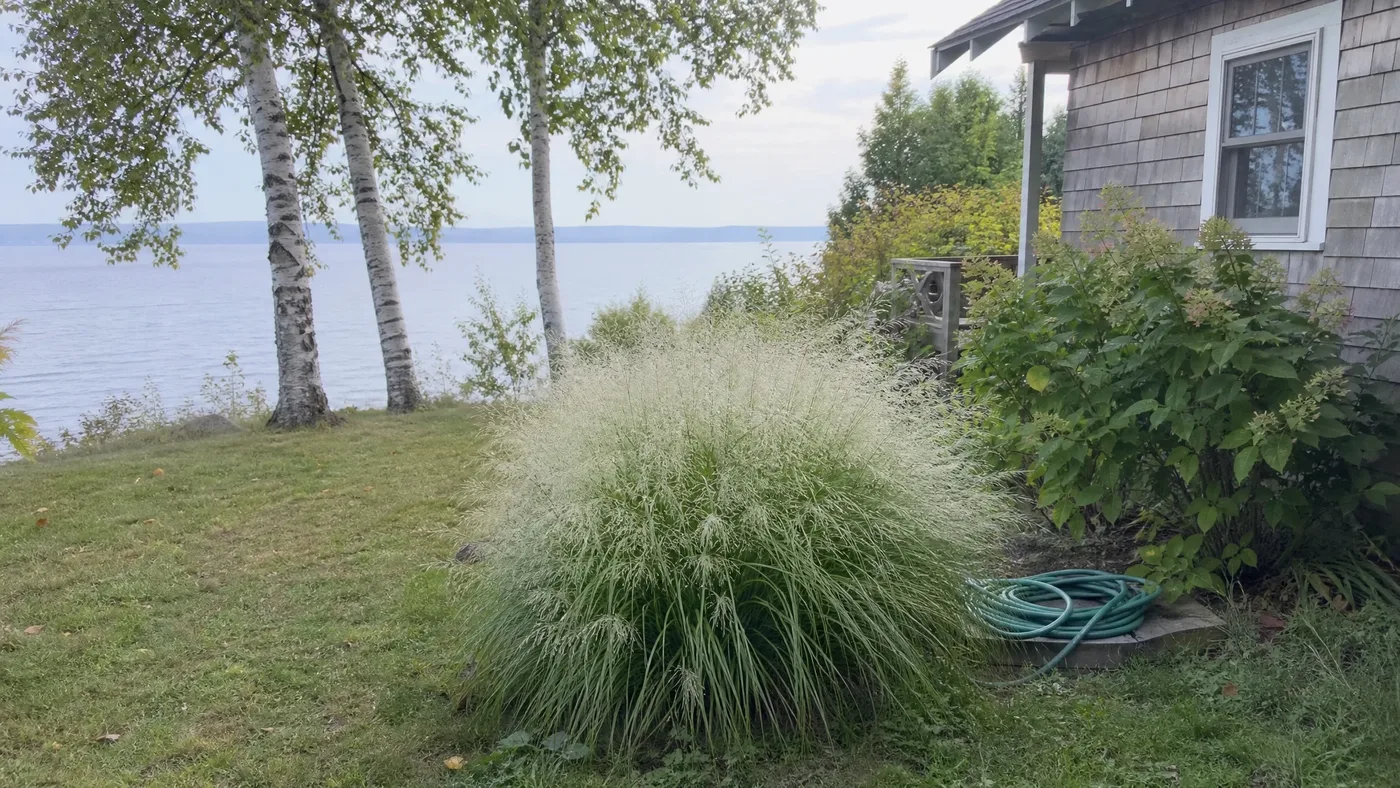
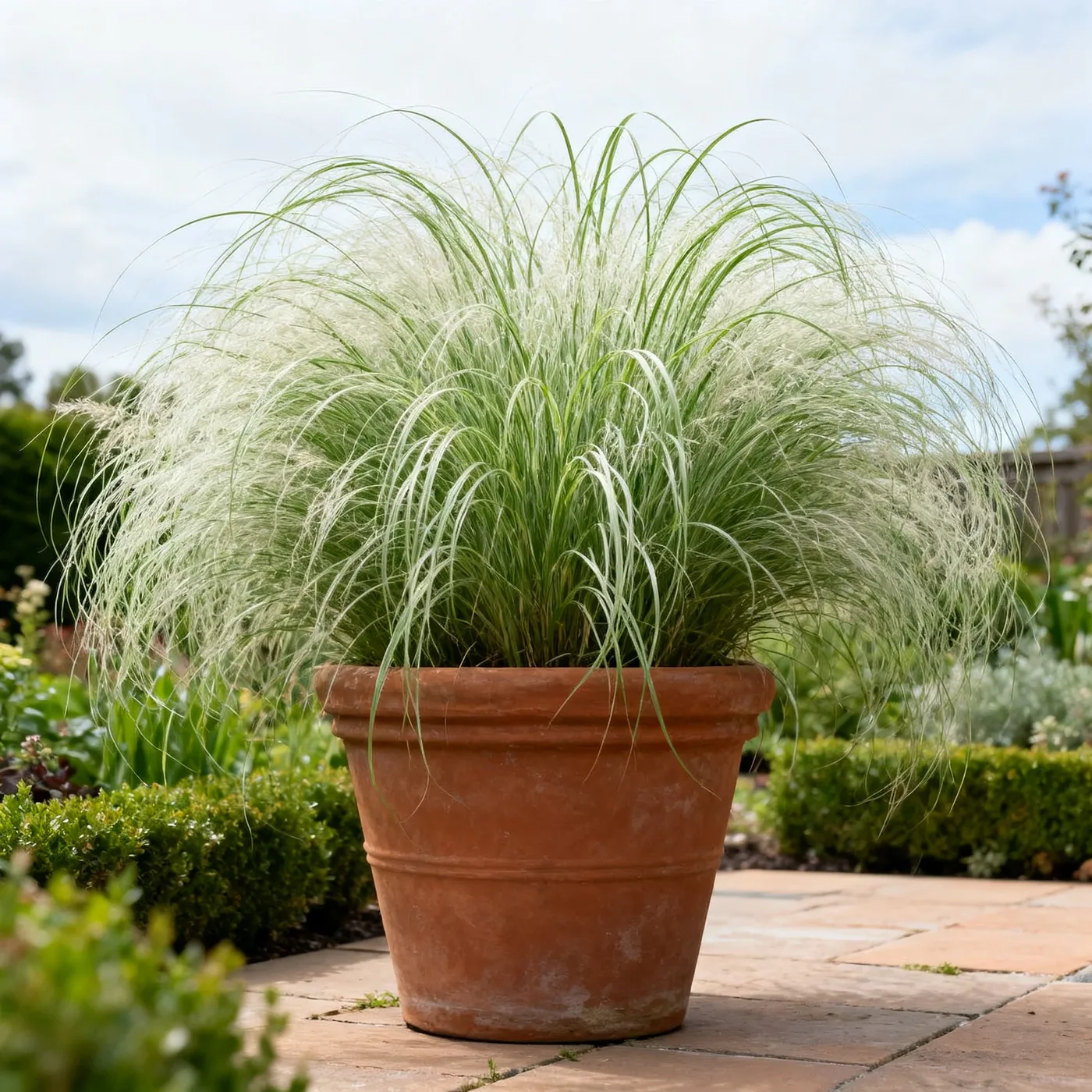
Now zoom in to one clump. Strip away the plumes and White Cloud is a clumping bunch grass like any muhly: a tidy, upright mound that spreads about as wide as it is tall. Clemson lists the cultivar at 1 to 3 feet high and wide, with clouds of white flowers in September.
The plumes are where the garden selection shows. The cultivar is upright, open and airy, with white flowers that bloom after the pink ones. It also resists tar spot. The species, by contrast, is often colored pink, purplish red or purplish gray.
Here is how the two compare:
- Plume color: white on the cultivar, pink to purplish on the wild plant.
- Timing: the white plumes arrive after the pink ones. Our bloom timing guide has the details.
- Size: Clemson lists the cultivar at 1–3 feet, while species sources give 2–4 feet, so do not assume the wild plant's height.
- Disease: tar spot resistance is noted for the cultivar and not stated for the species.
- Everything else: the same grass, with the same sun and soil tolerance.
That last line is why the white form is easy to grow. You get the toughness of a wild plant with a cleaner, showier flower color. If you are weighing the two side by side, see our white versus pink comparison.
Checking a White Cloud Muhly Grass Tag
A plant tag is the shortest route to an accurate label. Before you plant or list anything, run through these steps in order.
- Read the botanical name. It should say Muhlenbergia capillaris followed by the cultivar name in single quotes.
- Look for the cultivar name 'White Cloud'. If the tag only says "muhly grass," you may be holding the pink species.
- Check the flower color. White plumes mean the selection, and pink or purplish ones mean the wild type.
- Note the expected size. For the cultivar, think 1–3 feet high and wide.
- Record what the plant is on your list as written, not as "native" alone.
The last step matters most. A list that says only "native" hides the choice you made.
Keep the tag, or photograph it, when you plant. Gardens change hands, and the tag is the only record of which plant went where.
Calling White Cloud Muhly Grass Native, Accurately
Here is the direct answer to the title. White Cloud muhly grass is not itself a wild native plant. It is a cultivar, a named white-flowered selection, of a species that is native to Florida and much of the Southeast.
What the Wording Should Say
"Native" is true of Muhlenbergia capillaris. For White Cloud the accurate version is "a selection of a native species." That keeps both facts: the plant belongs in a southeastern landscape, and a person chose it.
What It Means for Planting Choices
Some native-plant programs, tours and certifications accept only straight species. Others accept cultivars of natives. Ask the program, because we will not guess its rules. If strict native status matters to you, plant the pink species and enjoy the contrast.
What About Wildlife?
The cultivar is identical to the pink form apart from flower color, but we have no source that measures what animals gain from either one. We leave out claims we cannot back, and we suggest your local native plant group for that question.
A fair rule: use White Cloud where you want a southeastern-appropriate, low-fuss grass with white plumes. Use the pink species where a wild-type planting is the goal.
Describing White Cloud Muhly Grass Correctly
The short version: the species, Muhlenbergia capillaris, is native to Florida and across the eastern United States. White Cloud is a white-flowered garden selection of it. It grows like its wild parent in sand, heat, humidity and salt air, and it asks very little once planted in sun and good drainage.
For a plant list or sign, we suggest this line: White Cloud muhly grass (Muhlenbergia capillaris 'White Cloud'), a white-flowered cultivar of a species native to Florida and the Southeast.
White Cloud Muhly Grass
Nursery-grown White Cloud Muhly Grass in sizes from Quart, shipped to your door.
From $39.99
Shop Now →Native to Florida and the Southeast, the species handles sand, heat and salt air, and our White Cloud gets the same sort of spot on our farms: bright, open sun and loose ground that sheds water fast. Our own growers raise and pack each plant, and we sell only top-quality grasses. When you are ready to put a white-plumed Southeast native in your own garden, come pick one out.