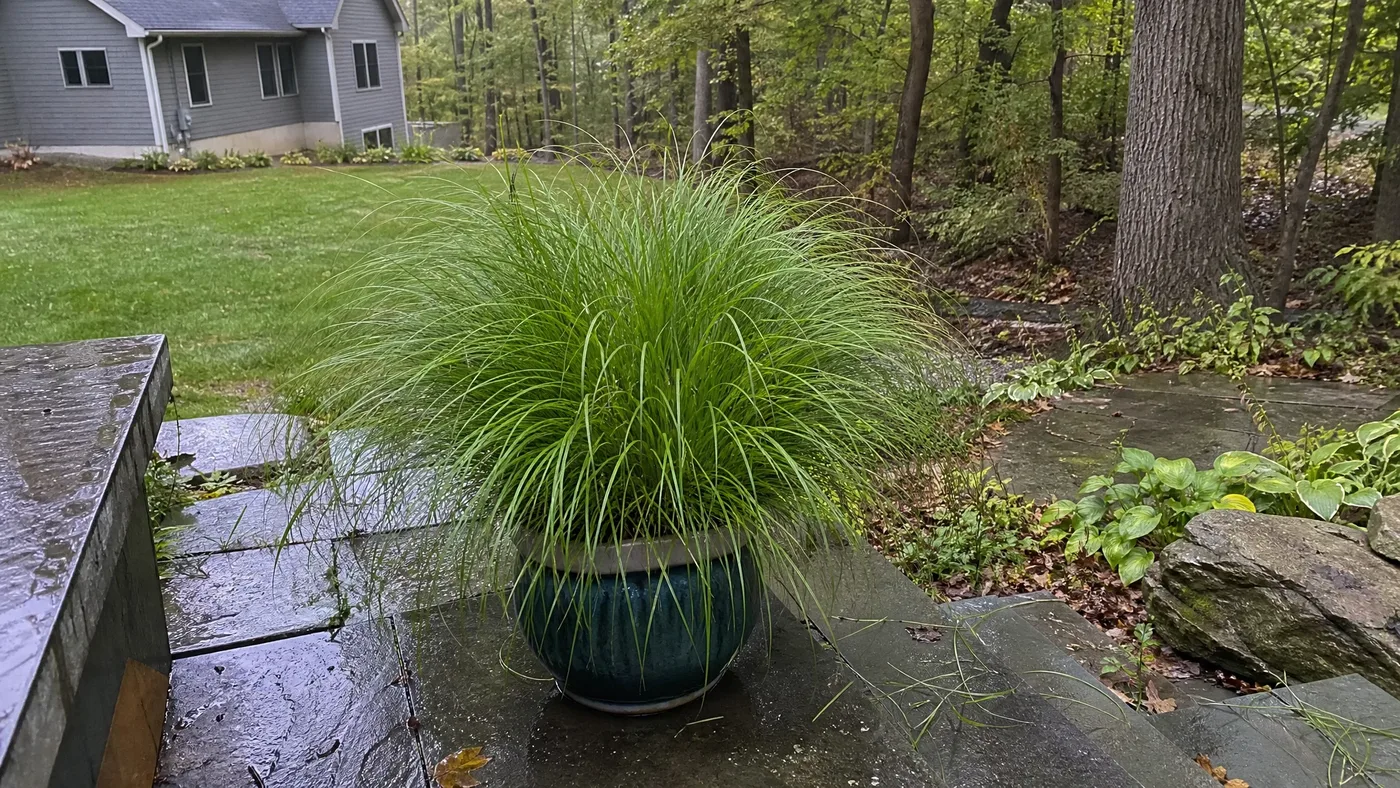
White Cloud Muhly Grass Botanical Name and Common Names
What do the words on a plastic plant tag actually mean, and which ones matter when you are buying? For most shoppers the tag is a jumble of Latin, quotation marks and a friendly name that may or may not match the plant in the pot.
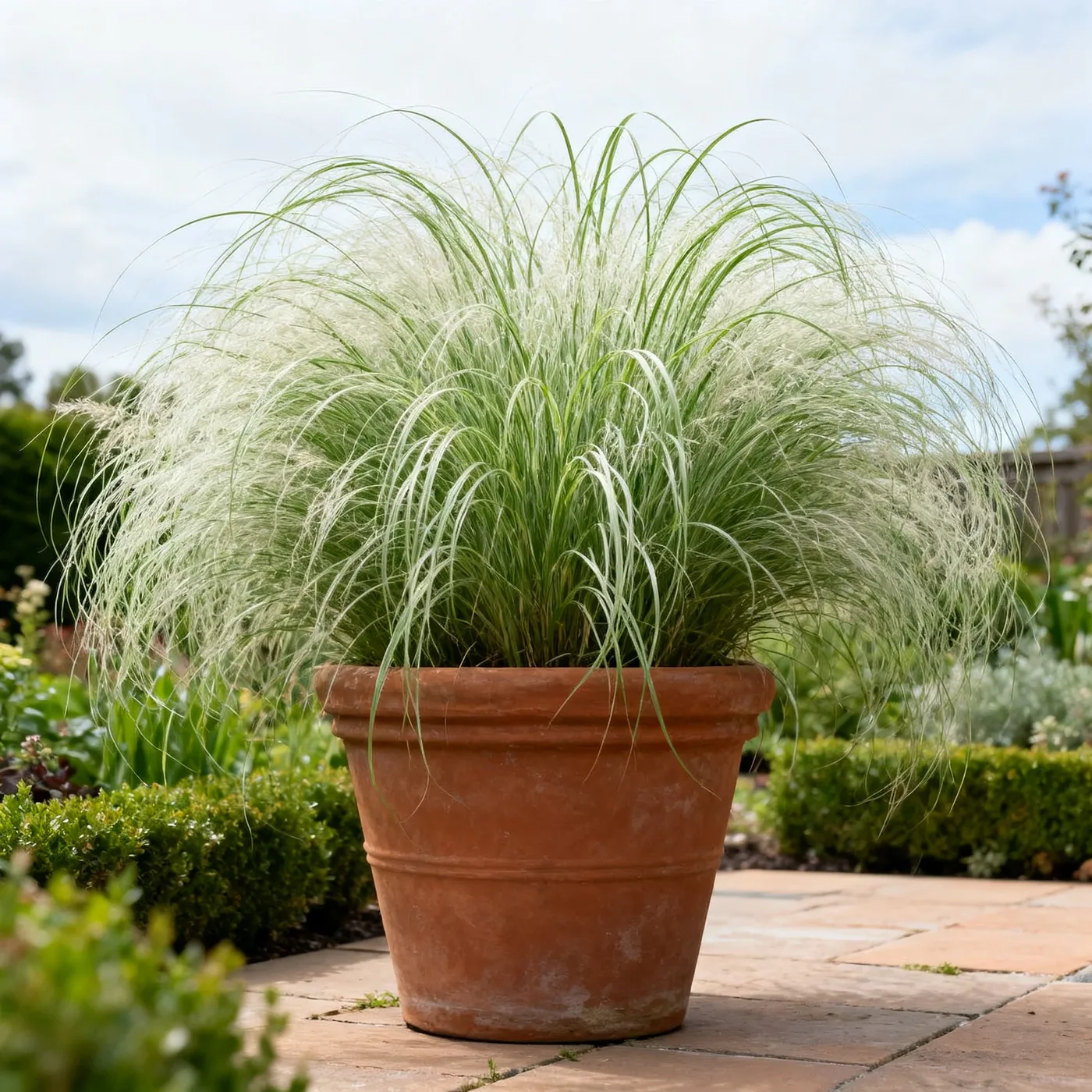
With ornamental grasses the stakes are real. Pink muhly and White Cloud look alike until they flower, and only in fall does one throw pink plumes and the other white ones. A wrong label means you find out in September, after the plant is already in the ground.
In this article, we'll go through the four terms behind every tag, what Muhlenbergia capillaris 'White Cloud' tells you piece by piece, the common names that cause mix-ups, and how to read a tag and spot a mislabeled pot.
Terms You Need Before Reading a Tag
Plant names work a lot like people's names. A surname tells you which family someone belongs to, a first name picks out the individual, and a nickname is what friends actually call them. Four terms on a tag line up with that idea, and each does a different job, so we'll take them one at a time.
Genus Comes First
The genus is the broad group, the surname of the plant. It is capitalized and written in italics. Every muhly grass belongs to the genus Muhlenbergia, and that group includes plants that look quite different from one another, so the genus alone never tells you which plant is in the pot.
Species Narrows It Down
The species is the specific kind inside the genus, the first name. It is lowercase and italic, and it only makes sense after the genus, never alone. Together the two words form the botanical name, which stays the same in every country and every language. That is why we trust it over any friendly label on a tag.
A Cultivar Is a Selected Plant
A cultivar is a plant selected on purpose and kept going because it has a trait people want, such as a different flower color. Its name comes after the species, in single quotes, with capital letters and no italics. Think of it as a named line within the species: same family, same first name, one chosen difference.
Common Names Are Local Habits
A common name is whatever people in a region call the plant. It follows no rules, belongs to no one, and has no checking body behind it. Two different plants can share one name, and one plant can carry five. Of the four terms, this is the one to trust least when you are spending money.
The Genus and Species Behind White Cloud Muhly Grass
Written in full, the botanical name is Muhlenbergia capillaris, with both words in italics. The first word is the genus and the second is the species. When a search or a catalog says "muhlenbergia capillaris white cloud," "white cloud muhlenbergia" or "muhly white cloud," it points at this same pair plus a cultivar, just in a looser order.
Plant databases agree on the spelling. ITIS lists Muhlenbergia capillaris with a current standing of accepted, so the name on a modern tag is the one in use today. The same record gives hairawn muhly as its common name, which we'll come back to.
The word capillaris is Latin for hairlike, and it describes the fine threads that make up the flower plumes. The genus name covers many grasses, so the species word is what narrows things down to this one. The species is native to the central and eastern United States and south to Mexico and Guatemala.
Muhly is the shortcut. It is the everyday shortening of the genus name, which is why so many tags carry both words. Muhly points to the group, while Muhlenbergia capillaris points to the exact species, and only the second one is precise enough to order from.
Here is the part that matters for buying. The species' flowers are often pink, purplish red or purplish gray. So a tag that reads only Muhlenbergia capillaris, with nothing after it, promises a pink-family plant, not a white one. Our post on why White Cloud is sold as pink muhlygrass explains how that overlap happens.
The Cultivar Name in Single Quotes
The last piece of the botanical name is the one buyers skip, and it is the one that makes this a white grass. Everything before it describes the species. The quoted words describe the exact plant you want, so it pays to know what they signal and what they leave out.
Why the Quotes and Capitals
Putting 'White Cloud' in single quotes with capital letters is a convention growers and botanists share worldwide. The marks tell the reader this is a cultivar name for a selected plant, not a Latin word and not a loose description. A full tag therefore reads Muhlenbergia capillaris 'White Cloud', with italics on the first two words only.
The quotes belong to the botanical form. Once the writing shifts to a common name, as in White Cloud muhly grass, they usually drop away, and that is fine. The shortened form M. capillaris 'White Cloud' is also fine, because only the genus is being abbreviated.
What the Name Promises
A cultivar name is a promise of specific traits, and for this one the sources agree on a short list.
- Upright, airy white flower plumes that bloom after the pink ones, according to NC State's notes on the cultivar.
- A September bloom, on a plant that stays 1–3 feet high and wide.
- Resistance to tar spot, a trait of the cultivar and not of the species.
- Everything else matching the pink form, which is identical in all the features apart from the white flower heads.
Notice what the name does not promise. The species can reach 4 feet tall and 3 feet wide, but the cultivar listing stops at 3 feet, so be wary of a tag quoting the bigger numbers. Our guide to how big White Cloud muhly grass really gets goes deeper on size.
A name describes the plant, not the packet. The quoted name is a claim about a selected plant, which is why grass raised from seed is a separate question. We cover it in whether seed-grown White Cloud stays white.
Common Names and Who Uses Them
Common names are where most of the confusion starts, so it helps to see how the main ones are actually used. One of the most common questions we get is whether white muhly and White Cloud are the same plant. Usually they are, but only the cultivar name guarantees it. The table below sorts the names you are most likely to meet.
| Name | What it usually points to | Where it causes confusion |
|---|---|---|
| White muhly | A white-flowered muhly, usually White Cloud | Names no cultivar, so a plain species plant can wear it |
| White awn muhly | The same white form, mostly seen in searches | Not an official name, and it reads like a blend of white and hairawn |
| Gulf muhly | The species, Muhlenbergia capillaris, in Gulf and Southeast writing | Also attached to a larger, later lookalike |
| Hairawn muhly, purple muhly grass, muhly grass | The species, as listed by ITIS | Color words mislead, since the species ranges from pink to purplish gray |
Texas A&M's AgriLife writers use Gulf muhly for the species and say it usually grows 2 to 3 feet wide. Mississippi State Extension calls it a Southeast native, and also mentions a selection with billowing white flower masses called White Cloud. In both cases the white plant is named separately from the species.
You will hear that white muhly is simply what you call the white one. We would not rely on that. Treat every common name as a search term and the botanical name as the order form.
Reading a White Cloud Muhly Grass Plant Tag
Here is an imagined tag of the kind you might pull from a bench of grasses. It reads: Muhlenbergia capillaris 'White Cloud', White Cloud Muhly Grass, full sun, 1–3 ft high and wide, white plumes in September. We'll go through it from the top.
- The first line is the one that counts. Look for the genus with a capital letter, the species in lowercase, and the cultivar in single quotes. If any of the three is missing, you are reading a partial name.
- The common name comes second. It is handy in conversation, and it should agree with the line above rather than replace it.
- The plant wants full sun, and Clemson allows light shade. A tag asking for deep shade fits neither.
- The size of 1–3 feet matches the cultivar range from Clemson. A tag showing 4 feet was probably copied from the species.
- White plumes in September ties the name to the color. A tag that promises pink plumes belongs to a different plant, whatever the top line says.
You may also see Muhlenbergia c. 'White Cloud'. Abbreviating the genus to a first letter is normal once it has been written out. Cutting the species down to a lone c. is not standard, and while it most likely stands for capillaris, we would ask before buying.
If a piece is missing, do not guess it into place. A tag with no quoted name, or with a size and color that disagree with each other, is a reason to ask the seller one plain question. The answer tells you more than the tag does.
For the physical side of the same check, such as pot sizes and what a healthy plant looks like, see our guide to buying White Cloud muhly grass.
Spotting Mislabeled White Cloud Muhly Grass at the Nursery
Mislabeling is rarely a trick. Pots get mixed on a bench, tags get swapped, and an unnamed seedling gets a friendly label because it sells. The checks below take a minute, and they work because the plant gives you real clues if you know where to look.
The Pink Species Under a White Label
The trickiest mix-up is a pink Muhlenbergia capillaris sold as White Cloud. Because the cultivar is identical to the pink form in every feature but flower color, leaves and clump shape will not help you. Only the plumes give it away.
Timing matters here. The species blooms from September through November, and White Cloud opens after the pink ones. A pot already showing pink plumes in early fall is not White Cloud, but a pot with no plumes yet proves nothing either way.
Unnamed Seedlings and Vague Tags
A tag that says only white muhly or muhly grass names no cultivar, so there is nothing to hold the seller to. Since the species itself runs from pink to purplish gray, an unnamed plant is a gamble on color. A cultivar name in single quotes at least gives you something to ask about.
Larger Lookalikes
Gulf hairawn muhly, Muhlenbergia filipes, is another plant sometimes mixed in. UF/IFAS says it is larger and blooms later with reddish-purple flower heads. Because Gulf muhly is also a common name for the species, the word Gulf on a tag is a prompt to ask which plant is meant.
Questions Worth Asking
You do not need to interrogate anyone. A few plain questions sort out most problems before you pay.
- Ask for the full botanical name including the cultivar, and expect to see it written down.
- Ask whether the grass was grown as the named cultivar or came from unnamed stock.
- If you can, shop in September or later, when plumes show, and judge the color yourself.
- If the answers are vague, choose another bench. A seller who knows the plant can name it.
Naming White Cloud Muhly Grass With Confidence
Put the names together in order: genus, species, cultivar in single quotes, then the common name last. Muhlenbergia capillaris 'White Cloud' is the form to write on an order or say to a seller, and white muhly or White Cloud muhly grass works as a friendly follow-up. The botanical line is the one that guarantees white plumes.
Try it on one more imagined tag: Muhlenbergia capillaris 'White Cloud', white muhly, 1–3 ft. The genus and species are present, the cultivar sits in single quotes, the common name agrees, and the size fits the cultivar. That tag passes. Drop the quoted name and it becomes a guess.
White Cloud Muhly Grass
Nursery-grown White Cloud Muhly Grass in sizes from Quart, shipped to your door.
From $39.99
Shop Now →Our growers keep an eye on White Cloud from spring clump growth to the September plumes, on our own farms in full sun and well-drained ground. They raise and pack each grass themselves, so go ahead and pick out a plant for your own garden, and check its tag the way we just did.