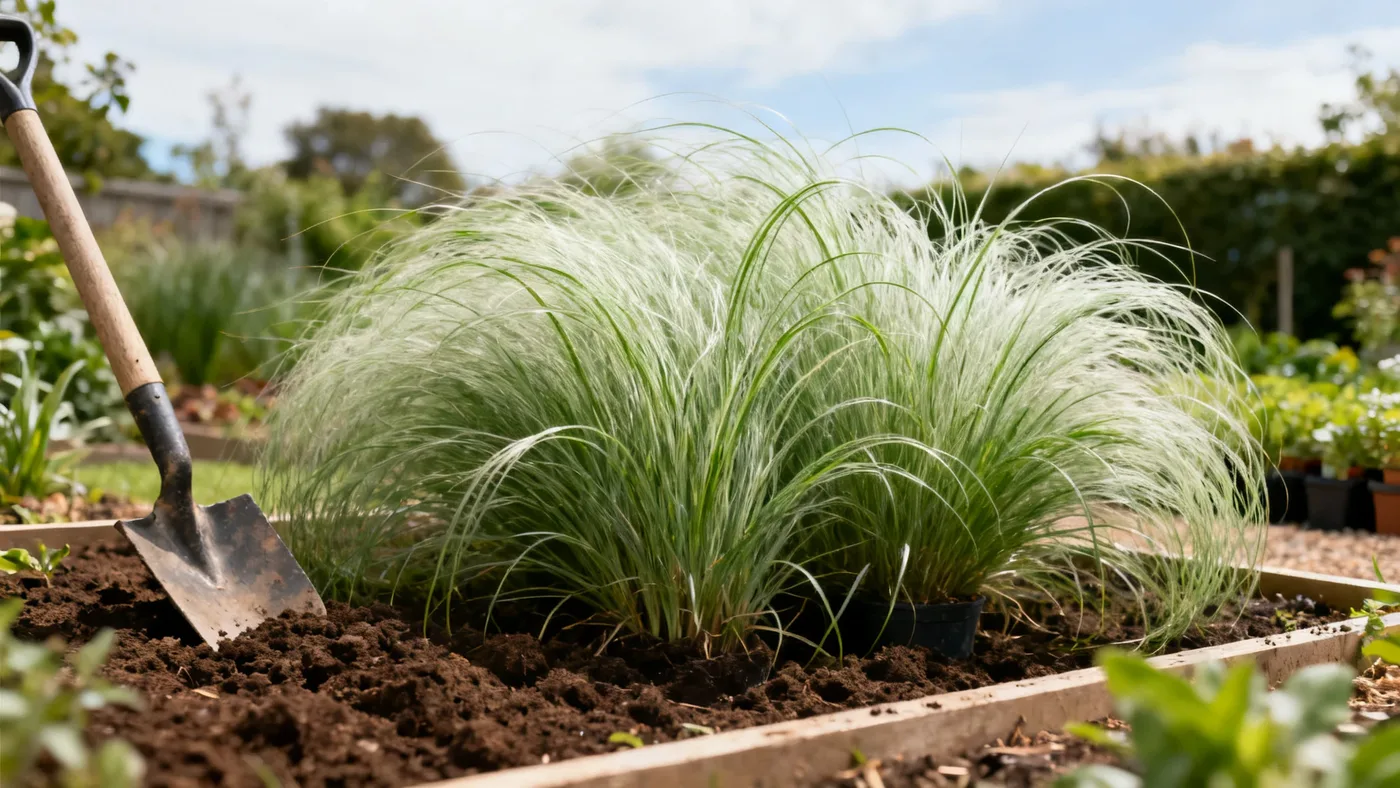
How to Plant White Cloud Muhly Grass for Best Results
White Cloud Muhly Grass is a stunning ornamental grass that rewards simple planting with years of airy white fall blooms. The key to success is choosing the right spot and getting it established properly in its first year. This guide walks you through each step, from site selection to first-season care.
What You'll Need for Planting
Before you dig, gather these supplies:
- A spade or shovel for digging
- A White Cloud Muhly Grass plant, typically sold as a quart, #1, or #3 container
- Organic compost or aged pine bark (optional, for amending heavy soil)
- A garden hose or watering can
- Mulch: shredded bark, compost, or similar (2 to 3 inches)
- A measuring tape or marked stick for spacing
- Work gloves
The good news: you don't need much. This grass is adaptable and forgiving. Amending soil is helpful if you have dense clay, but it's not mandatory. If you've kept the plant in its container until planting day, that's fine, just keep it watered.
When to Plant White Cloud Muhly Grass
Timing matters for success. Plant in spring or early fall. Both seasons give the grass enough time to establish roots before heat or cold stress arrives.
Spring planting, typically March through May in most zones, allows the grass to settle in during warm months. You may see flowers in its first fall after a spring planting, though most plants take until their second year to bloom fully.
Early fall planting, typically August through September, works just as well. The grass roots into cool soil and avoids spring drought. Fall-planted grasses establish well before winter.
White Cloud Muhly Grass is hardy in USDA zones 6 through 9, though some growers report success in zone 5 with extra protection. Check your local extension office if you're at the edge of this range. Avoid planting in the thick of winter or during peak summer heat, when transplant stress runs high.
Choosing Your Planting Location
The right site is half the battle. This grass thrives in full sun. It tolerates light or part shade, but flowering diminishes noticeably in low light. If you want those white cloud blooms, give it sun.
Drainage is your next priority. White Cloud Muhly Grass does not like soggy feet. It tolerates sandy, loamy, and clay soils, but it demands well-drained soil. If your site stays wet for days after rain or has a history of poor drainage, either choose a different spot or plan to amend heavily. A slight slope or raised bed helps if flat soil is your only option.
Soil pH should fall somewhere between 5.5 and 7.5, which covers most garden soils. Unless your garden is unusually acidic or alkaline, you don't need to test or adjust pH before planting.
Consider mature size. This grass reaches 2 to 4 feet wide and 3 to 4 feet tall including the white bloom plumes at maturity. Plant it where it has room to spread without crowding nearby plants or casting shade on surrounding areas.
Preparing the Planting Site
Prepare your hole before you open the container. Dig a planting pit roughly as deep and twice as wide as the root ball. If you're planting a #1 container (the most common size), that's roughly a 10 to 12 inch-wide hole.
On heavy or clay soil, dig deeper and wider. Loosen the surrounding soil so roots can expand easily into soft ground. This is especially important for clay: a tight planting hole becomes a root-bound trap.
If your soil is dense clay or poorly draining, mix compost or aged pine bark into the excavated soil before backfilling. A 50/50 blend of existing soil and amendment works well. Skip this step if your soil drains freely or is already loamy and soft.
Do not amend sandy soil. It already drains well; adding compost may actually slow drainage and create a perched water table inside the planting hole.
Step-by-Step Planting Instructions
- Remove the plant from its container. Gently tip the pot and slide the grass out. If it's root-bound (roots circling the outside), loosen them lightly with your fingers. Don't shred the roots, but do tease them apart enough that they'll grow outward into the surrounding soil instead of staying in a tight spiral.
- Position the plant in the hole. Set the root ball in the center of your prepared pit. The top of the root ball should sit level with the ground surface. If the grass sits too low, it may rot after heavy rain. If it sits too high, roots dry out. Level is right.
- Backfill the hole. Return the excavated soil (and any amendments you mixed in) to the hole around the root ball. Firm it gently with your foot or hands. You want contact between soil and roots, but don't pack it hard. The grass should stand upright without wobbling.
- Water deeply. Give the newly planted grass a thorough watering. Water until the soil is wet 4 to 6 inches down. This settles the soil, eliminates air pockets, and helps roots contact the surrounding soil. You'll see the soil level drop slightly; that's normal.
- Mulch around the plant. Apply 2 to 3 inches of mulch (shredded bark, compost, or similar) around the base of the grass. Keep the mulch a few inches away from the center of the clump so air can circulate. Mulch conserves moisture and moderates soil temperature during the first critical months.
- Mark your spacing. If you're planting multiple grasses in a mass planting, space them 18 to 36 inches apart depending on how quickly you want a full effect. Closer spacing (18 inches) creates a dense look in one to two years. Wider spacing (24 to 36 inches) allows individual plants to show their shape and costs less upfront.
- Water again if the day is hot. If you planted during a warm spell, water again lightly that evening to prevent transplant stress. After that, follow the first-season care plan below.
First-Season Care
Water regularly for the first month or two after planting, especially if spring or early fall rains don't arrive. The goal is to keep the soil consistently moist (not soggy) while roots expand into the surrounding soil. After this establishment period, you can taper back unless your region is unusually dry.
Once established, White Cloud Muhly Grass is drought tolerant and needs minimal watering. A deep watering once every two to three weeks is usually enough in most climates. In dry regions, water weekly during the first season; then cut back once growth is strong.
Leave the mulch in place through the first growing season. It buffers temperature swings and prevents soil from crusting. Pull it back slightly in late winter to let spring sun warm the root zone.
The grass grows at a moderate rate, roughly 1 to 2 feet per year. After two to three years, it reaches full mature size. Don't expect a huge full clump in year one. This is a perennial that rewards patience.
Do not fertilize the newly planted grass. Low to moderate fertility is fine; heavy fertilizing can cause weak, floppy growth and actually reduces blooming. If your soil is very poor, a light spring application of balanced fertilizer is optional, but it's rarely necessary.
Tips for Best Results
Plant containerized stock in spring or early fall, not in dormant winter or peak summer. Container plants are vulnerable to transplant shock in temperature extremes.
If you must plant in summer, shade the grass lightly for the first two to three weeks with a cloth or shade cloth. This reduces sun stress while roots establish.
Mass plantings are more forgiving than single specimens. The combined root system holds moisture better, and the plants shelter one another.
Inspect the soil a few days after planting. If it has settled significantly, add a small amount of backfill soil to keep the top of the root ball level.
For more detail on long-term care, watering, pruning, and troubleshooting, see our complete care guide for White Cloud Muhly Grass.
Common Planting Mistakes to Avoid
Planting too deep is the most common error. If the top of the root ball sits below the soil surface, the crown can rot after rain or irrigation. Keep it level.
Failing to loosen roots on root-bound plants leaves them strangled. Spend a few seconds loosening the root ball. It makes a real difference in year-two growth.
Planting in shade or part shade reduces blooming. White Cloud Muhly Grass earns its name in full sun. If you're willing to trade some flowers for a shaded corner, accept that trade consciously, but know that's not the plant's best performance.
Amending sandy soil or overwatering sandy plantings keeps roots too wet. Sand drains fast by nature. If you have sandy soil, plant and step back. Let the grass do its job.
Over-fertilizing causes rank, floppy growth and fewer flowers. This grass evolved in low-fertility landscapes. Feed it lightly or not at all.
Quick Planting Reference
| Task | Timing / Detail |
|---|---|
| Best planting season | Spring or early fall |
| USDA hardiness zones | 6-9 (some growers report success in zone 5) |
| Sun requirement | Full sun for best blooms |
| Soil type | Well-drained; adaptable to sandy, loamy, or clay |
| Soil pH | 5.5-7.5 (most garden soils work) |
| Spacing | 18-36 inches apart (closer for mass effect, wider for individual shape) |
| Hole size | As deep and twice as wide as root ball |
| Mulch layer | 2-3 inches |
| First-season watering | Regular for 4-8 weeks; taper after establishment |
| Time to full size | 2-3 years |
| Mature height | 3-4 feet (including white bloom plumes) |
| Mature width | 2-4 feet |
| First bloom (typical) | Fall of the same year (spring plantings) or next year (fall plantings) |