White Fuzz on White Cloud Muhly Grass: Bloom or Problem?
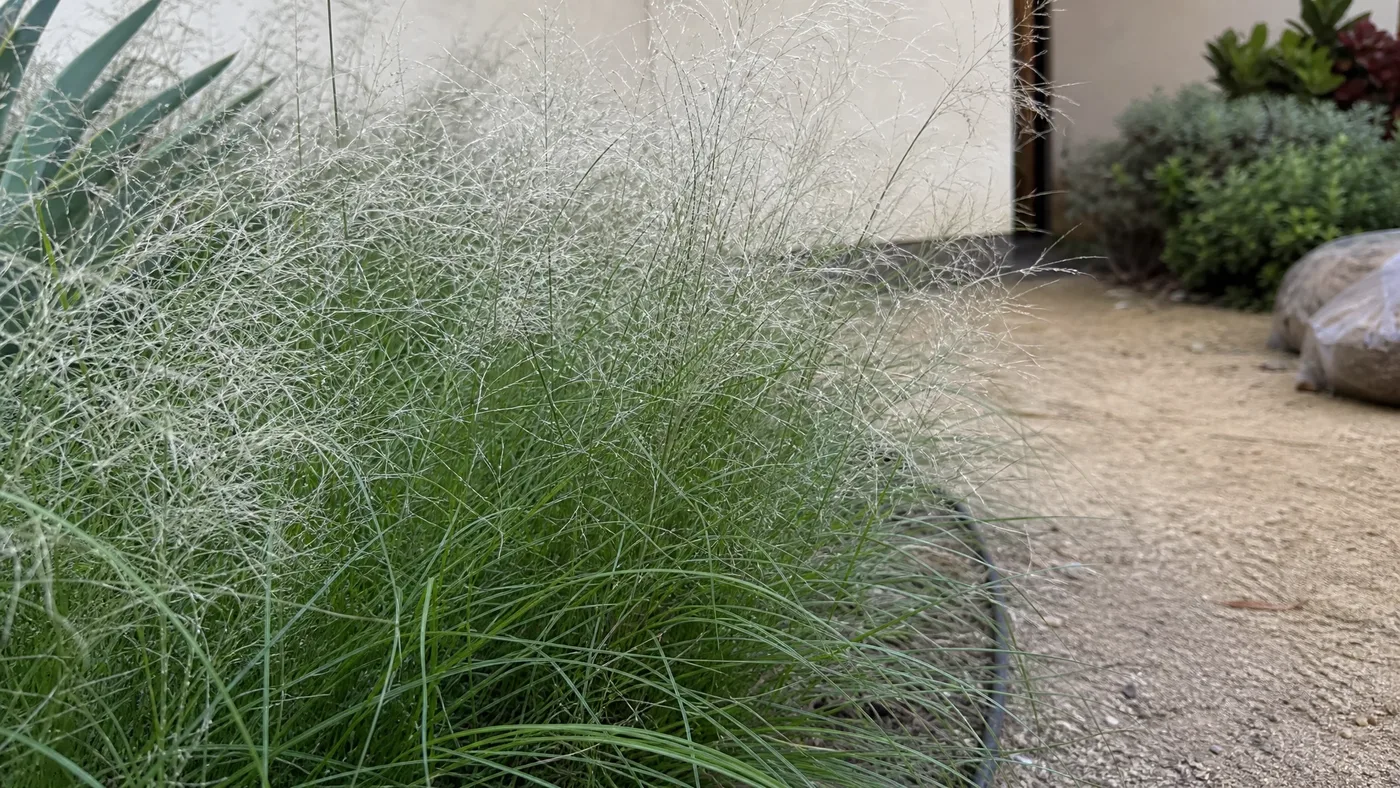
Walk past a drift of White Cloud at five o'clock on a late September afternoon and the whole planting looks lit from within, a pale haze hovering above the foliage. Step closer and you see fuzz, and a reasonable question forms: is this glow or growth? Here is the odd thing about this plant. The white fuzz is the whole reason to own it.
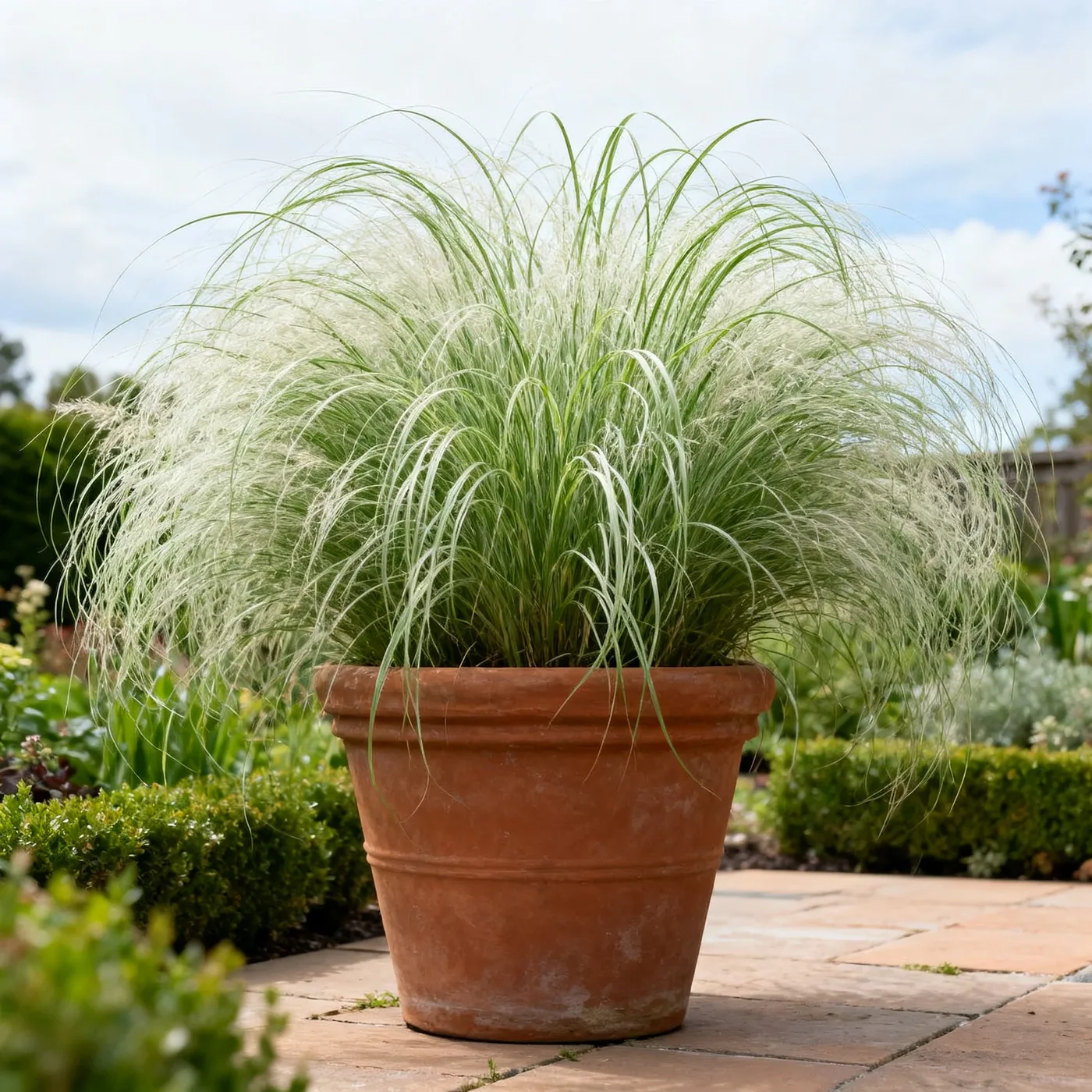
White Cloud is the white-flowered cultivar of pink muhly, and its plumes open after the pink ones. That timing makes it easy to mistake the best week of the year for a fungus, and just as easy to wave off a real pest as part of the show.
We'll walk you through what a healthy plume looks like, then the three true white problems (powdery film, cottony mealybugs and gray mold), and finish with a simple test that uses the month and the spot on the plant.
Fluffy White Plumes Above the Foliage
A healthy White Cloud plume is airy, upright and open, a loose spray of tiny white flowers held on slender stems above the leaf mass. The flowers are upright, open and airy, blooming after the pink ones. Backlit by low sun, the whole cloud picks up a soft glow and sways with the lightest breeze, which no fungus does.
Scale gives you a second check. The cultivar grows 1 to 3 feet high and wide, and the plumes rise over that mound like mist over a pond. The white sits at the top of the plant, on the stems, and never on the lower leaves. Brush a plume with your hand and it feels like fine, dry thread.
Timing is the other half of the baseline. Clemson's factsheet gives September for the white flowers, and NC State puts the species' bloom season at September through November. A plume that appears in that window, above the foliage, is flowering and needs nothing from you.
One of the most common questions we get each fall is whether the haze is mold, and nearly every time the photo shows plumes in their prime. Pink muhly has the same airy structure, so white on a pink plant is never bloom at all. Keep that in mind if your search brought you here for the pink form.
Dusty Film on White Cloud Muhly Grass Blades
A true white problem on the leaves looks like flour dusted over the blades, a pale film that starts as scattered patches and spreads. This is powdery mildew. The bloom never grows on the blades, so a film there is the plant telling you something about its surroundings.
Why the Film Takes Hold
Mildew spreads where air stalls. A clump jammed against a wall, or crowded by taller perennials, holds humid air around its leaves long after the dew should have dried. Muhly tolerates heat and humidity, so on this plant a film usually points to crowding more than to the weather.
Spacing is the long-term cure. Space plants 2 to 3 feet apart, and that gap is what lets air move through a mature clump. Our spacing guide covers hedges and borders if you are planting a row.
Clearing It Up
Treat it as an airflow job first and a spray job last. A film that smears under your thumb sits on the surface, which separates it from the fixed white of a mealybug mass. Then work through these steps:
- Remove or cut back neighbors that lean over the clump and hold humid air against it.
- Water at the base and in the morning, so the blades dry quickly.
- Cut the worst leaves out, and clear the whole clump when you do the yearly cut-back.
- If the film returns every year, ask your local extension service which fungicide is labeled for ornamental grasses in your state.
Light mildew on late-summer blades rarely hurts an established clump. Fix the crowding and it tends to fade on its own.
Cottony Clumps Low at the Crown
Clumps of white fluff tucked into the leaf bases are muhly grass mealybugs. The wax and filaments look bright white and hairy, like a loose cotton swab. NC State adds that the females lay eggs into dense, white, felt-like sacs on the leaves.
The giveaway is the shape and the place. Mealybugs form lumps and tufts, not a film, and they gather low at the crown and along the lower blades. Part the foliage with both hands and look down into the center of the clump, since that is where the cotton hides first.
The calendar helps too. In South Carolina, infestations become noticeable from late May to June and stay active until late fall, so white at the base in early summer cannot be bloom. Warmer or cooler regions shift those dates, so check with your local extension service.
The stakes are real, because severe infestations can delay or prevent the fall flowering that makes the plant worth growing. Here is how we handle it:
- Confirm the cottony masses at the crown before you do anything else, using the test later in this guide.
- Cut out and bag the most heavily coated leaves instead of tossing them on the compost pile.
- If the infestation keeps spreading, UF/IFAS says a systemic insecticide or oil spray is the choice where treatment is warranted.
- Look at our problems guide for how mealybugs sit alongside rust, scale and root rot.
Plenty of advice says to spray at the first sign of white. We'd rather you confirm first, because a few tufts are common and a wrong guess wastes a treatment.
Gray Fuzz After a Wet Spell
After days of rain or fog, you may find a fuzzy gray or whitish growth on the lower leaf bases and in the dead thatch around the crown. This is mold, and it differs from mildew in color, texture and place. It is grayer, loftier and low in the clump, often over old, matted foliage that never dried out.
The cause is water that lingers. A crown sitting in slow-draining soil stays wet far longer than the leaves above it. The University of Arkansas extension says muhly grows in sunny to lightly shaded sites as long as there is sufficient soil drainage, and a wet-weather mold is the plant telling you that condition has slipped.
Drainage Changes That Help
Start at the soil. If water pools around the clump after a storm, raise the planting area a few inches with a gentle mound, or move the grass to a better spot. Keep mulch pulled back from the crown, since mulch heaped against it holds moisture exactly where you do not want it. Our soil guide covers drainage in clay and sand.
Airflow and Sun
Then open the clump. Give it full sun, six or more hours of direct light, because sun dries a wet crown faster than anything else you can do. Comb or cut out dead foliage that has matted at the base. In our rows, the clumps that stay clean after a rainy stretch are the ones with open sun and nothing mulched against the crown.
Established clumps are drought tolerant, so do not add water while mold is showing. Let the crown dry out, and the fuzz usually stops spreading within a week or so of dry weather.
A Season-and-Location Test for White Cloud Muhly Grass
You only need two facts to sort bloom from trouble: the month, and how high on the plant the white sits. Bloom happens in fall and rides on stems above the foliage. Almost everything else happens at other times, on the leaves or down in the crown. This table puts the pattern in one place.
| When you see it | Where on the plant | What it most likely is |
|---|---|---|
| September into fall | Airy cloud on stems above the foliage | Normal bloom |
| Winter | Tan plumes still standing | Spent bloom, also normal |
| Late May to June, South Carolina timing | Cottony tufts at the crown and lower blades | Mealybugs |
| Humid summer stretch | Flour-like film on the leaf blades | Powdery mildew |
| After long rain, any month | Gray fuzz on lower leaf bases and thatch | Mold |
Read the table from the top down. If the white is above the leaves and it is fall, stop worrying. If it is below the leaves, on the blades or at the base, move down the rows until the description matches what is in front of you.
The test also protects you from the two opposite mistakes. One is spraying a healthy bloom, which wastes product and gains nothing. The other is dismissing cottony tufts at the crown as just part of the fall show, which lets a pest build up while the plumes fail to arrive.
When the answer is still unclear, take a photo of the whole clump and one close-up of the white itself, then compare them with the table. Your local extension office can confirm an identification if you still cannot tell.
When White Cloud Muhly Grass Is Just Blooming
Most of the white you will ever see on this plant is flower, and it asks for nothing. The plumes need no spraying, rinsing or deadheading. The seed plumes stay tan and attractive through winter, so a faded, buff-colored plume in January is normal too. Our guide to bloom timing explains how long the display lasts.
Cultivar traits help you here as well. White Cloud is identical to the pink form apart from flower color, so the plant's habit, size and care match pink muhly. It also resists tar spot, so you can set one common leaf disease aside when you read your clump.
A few signs should still send you looking. White fluff at the crown while the plumes are thin or missing deserves a close inspection for mealybugs. A flour-like film on leaves in a crowded planting means it is time to open the space. Gray fuzz with soft, discolored tissue underneath means the drainage needs attention.
Outside those cases, leave the plant alone. That is the whole appeal of this grass: plant it in sun and well-drained ground, give it room, and let the fall show happen without fussing.
White Cloud Muhly Grass at Dusk, and One Last Check
Picture the plumes at dusk, a soft pale cloud that holds the last light long after the garden around it has gone dim. That glow is the plant doing exactly what it should. If you remember one rule, remember this: white above the foliage in fall is flower.
If white ever shows up anywhere else, kneel down and part the blades. White at the crown or on the leaf surface is a signal to act, and the month and location test above will tell you which of the three culprits you are facing.
White Cloud Muhly Grass
Nursery-grown White Cloud Muhly Grass in sizes from Quart, shipped to your door.
From $39.99
Shop Now →White Cloud is a plant that rewards a plain routine, so on our farms each clump gets open sun, a fast-draining bed and very little fuss, which is how the plumes stay clean and white. Every plant we sell, whether grass, shrub or tree, is top-quality stock raised by our own growers on our own farms. If this guide has you wanting a healthy White Cloud of your own, have a look at what is in stock now.