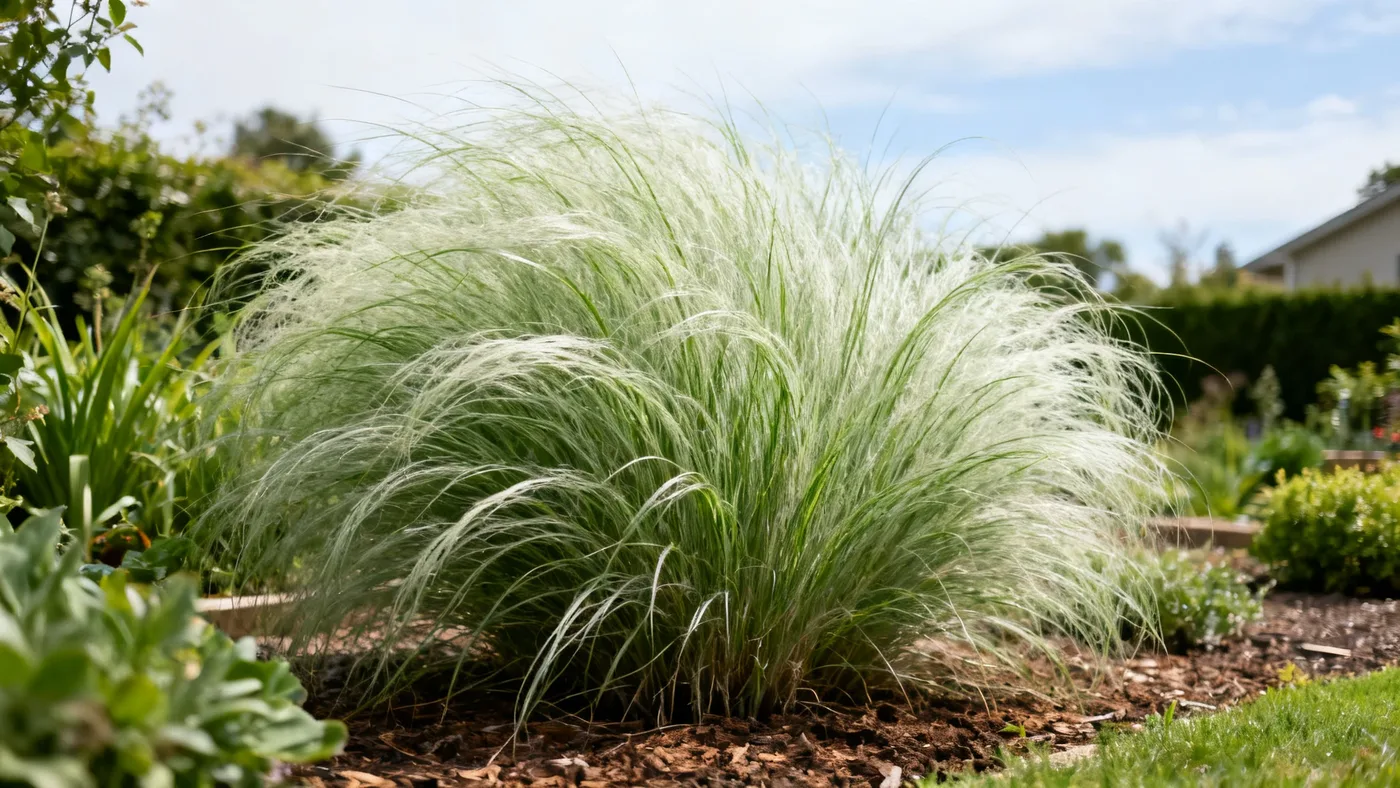
Common White Cloud Muhly Grass Problems and How to Fix Them
White Cloud Muhly Grass is generally low-maintenance once established, but it can still run into trouble. Poor growing conditions, cultural mistakes, and environmental stress all create openings for problems to develop. The good news is that most issues are preventable, and many can be reversed if you catch them early.
Below are the most common problems you'll encounter with this plant, along with straightforward fixes that work.
1. Floppy or Leggy Growth
One of the most common complaints from home gardeners is that their White Cloud Muhly Grass looks thin, sprawling, or drooping instead of forming a tight, upright clump. The foliage falls flat, and the plant loses its architectural shape. This happens when the plant gets too much of something: shade, water, or fertilizer.
Shade is the primary culprit. White Cloud Muhly Grass performs best in full sun, where it can develop dense, sturdy growth and produce abundant white plumes. In light shade or partial shade, it stretches toward available light and becomes floppy. Overwatering also softens the plant, and excessive nitrogen fertilizer encourages soft, weak growth that can't hold itself up. If you're fertilizing regularly, stop. This grass needs very little nitrogen.
Fix: Move the plant to full sun if possible, or wait until spring to relocate it to a sunnier spot. Cut the plant back hard (to a few inches above the ground) in late winter, around February or March, before new growth starts. This encourages denser regrowth. In future seasons, water only during establishment (the first growing season) or during extended drought. Once established, this plant is quite drought tolerant.
2. No Blooms or Very Few Blooms
You're expecting those signature white, cloud-like plumes in fall, but instead you get green foliage and almost nothing else. This is frustrating because bloom is what makes White Cloud Muhly Grass special. The problem usually comes down to light or timing.
Insufficient light is the leading cause. The plant needs full sun to produce abundant flowers in fall, typically September through November. Even partial shade can cut blooming significantly. Occasionally, overfeeding (especially with nitrogen) will favor foliage at the expense of flowers, or delay bloom. Finally, young plants (first year after planting) may not bloom at all if they're still establishing, which is normal. Most plants will bloom in their first fall after a spring planting, but expect full, mature flowering by year two or three.
Fix: Ensure your plant gets at least 6 to 8 hours of direct sun daily. If it's in shade, you have two options: move it, or accept reduced flowers and enjoy the fine foliage. Stop fertilizing, or use only a light application of balanced fertilizer in spring. Be patient with young plants. If you just planted last spring, next fall should bring flowers. For more detail on care, see our complete care guide.
3. Brown, Dry, or Dying Foliage
The leaves start to turn brown or tan, often from the center of the clump outward, or the entire plant looks tired and withered. This can happen for several reasons, and diagnosis matters because the fixes are different.
In fall and winter, some browning is normal. The foliage naturally takes on a bronze or tan cast as temperatures drop, and this is actually part of the plant's appeal. But if browning appears during the growing season (spring or summer), or if it's accompanied by wilting, look first at drainage and watering. Soggy soil is the enemy of this grass, especially if the soil drains poorly. Heavy clay or waterlogged soil can cause the plant to decline quickly. Underwatering during the first year of establishment can also stress young plants. On the flip side, established plants have deep roots and tolerate drought well, so older plants rarely die from too little water.
Fix: Check your soil drainage. If water sits on the soil after rain, you need better drainage. Amend heavy soil with sand and compost, or relocate to a raised bed or slope. During the first growing season (spring and early summer), water regularly while the plant is establishing its root system. Once established, you can step back. Winter browning is normal, and you can leave the dried foliage and plumes on the plant until late winter, when you cut it back to a few inches above ground in February or March.
4. Rust (Fungal Disease)
Small rust-colored or orange spots appear on the leaf blades, often on the lower or interior parts of the clump. As rust progresses, the leaves may yellow and decline. Rust is a fungal disease that thrives in warm, humid conditions with poor air circulation. It's not common on White Cloud Muhly Grass, but it can happen, especially in the South during humid summers or in tightly planted stands where air doesn't move through the foliage.
Stressed or weakened plants are more susceptible than healthy ones. Overwatering, poor drainage, and crowding all invite rust. The disease spreads via spores on water and air, so it tends to appear first on the parts of the plant that are most shaded or wet.
Fix: Improve air circulation by pruning out dead or damaged foliage, spacing plants 18 to 36 inches apart depending on your design goal, and avoiding overhead watering. Water at the soil level in early morning. If rust appears, remove the affected leaves by hand if you catch it early. Fungicides are rarely needed, but if rust is severe and spreading, a sulfur or copper-based fungicide applied according to label directions can help. More importantly, address the underlying conditions: ensure good drainage, avoid overwatering, and thin crowded plantings.
5. Root and Crown Rot
The plant looks increasingly unwell: foliage yellows or browns, growth slows dramatically, and eventually the whole clump may collapse or die. When you dig down and inspect the crown (the base where shoots emerge), it's soft, mushy, or black. This is root or crown rot, a serious problem caused by prolonged waterlogging.
This disease is almost always a soil and drainage problem, not a pest or pathogen issue in the traditional sense. White Cloud Muhly Grass prefers well-drained soil. It will tolerate sandy, loamy, and clay soils across a wide pH range, but it cannot sit in wet soil month after month. In heavy clay, poorly amended soil, or a location where water pools, the roots and crown eventually rot. Once rot sets in, the damage is usually irreversible.
Fix: Prevention is the key. Plant in well-drained soil, amend heavy clay with compost and sand, or use a raised bed. If rot has already started, try digging up the plant, removing all the rotted material, letting the crown dry out in sun for a few days, and replanting in fresh, well-draining soil in a new location. If the rot is extensive, it's better to remove the plant and start over. When replanting, never return it to the same soggy spot.
6. Pest Infestation (Mealybugs and Scale)
White Cloud Muhly Grass is generally pest-free, which is one of its biggest advantages. However, in rare cases, mealybugs or scale insects can appear, usually on plants that are already stressed by poor conditions like drought, full shade, or compacted soil. Stressed plants produce weaker tissues that pests find easier to colonize.
Mealybugs appear as tiny white cottony clusters on leaf stems and the crown. Scale insects are small, hard bumps that stick to foliage and stems. Neither is common on ornamental grasses, but both can do damage if populations build up. You're more likely to see these on plants weakened by cultural neglect than on healthy, vigorous plants in good conditions.
Fix: The first step is to restore the plant's health. Move it to full sun if it's in shade. Improve drainage if the soil is heavy. Avoid overwatering or underwatering. Once the plant is thriving again, pest pressure usually drops on its own. If pests persist, spray the foliage with a strong stream of water to dislodge them, or use insecticidal soap or horticultural oil according to label directions. Systemic insecticides are rarely necessary for ornamental grasses.
Quick Reference: Prevention and Response
| Problem | Cause | Quick Fix |
|---|---|---|
| Floppy growth | Too much shade, water, or fertilizer | Move to full sun; cut back in Feb-March; stop fertilizing |
| No blooms | Insufficient light; plant too young | Full sun required (6-8 hours); young plants bloom by year 2-3 |
| Brown foliage | Poor drainage; waterlogging; seasonal change | Improve drainage; reduce water; winter brown is normal |
| Rust spots | Humid conditions; poor air circulation | Thin foliage; space 18-36 in. apart; water at soil level |
| Root/crown rot | Prolonged waterlogging; poor drainage | Move to well-drained site; remove plant if rot is severe |
| Mealybugs or scale | Plant stress; poor conditions | Restore health (sun, drainage); spray water or use insecticidal soap |