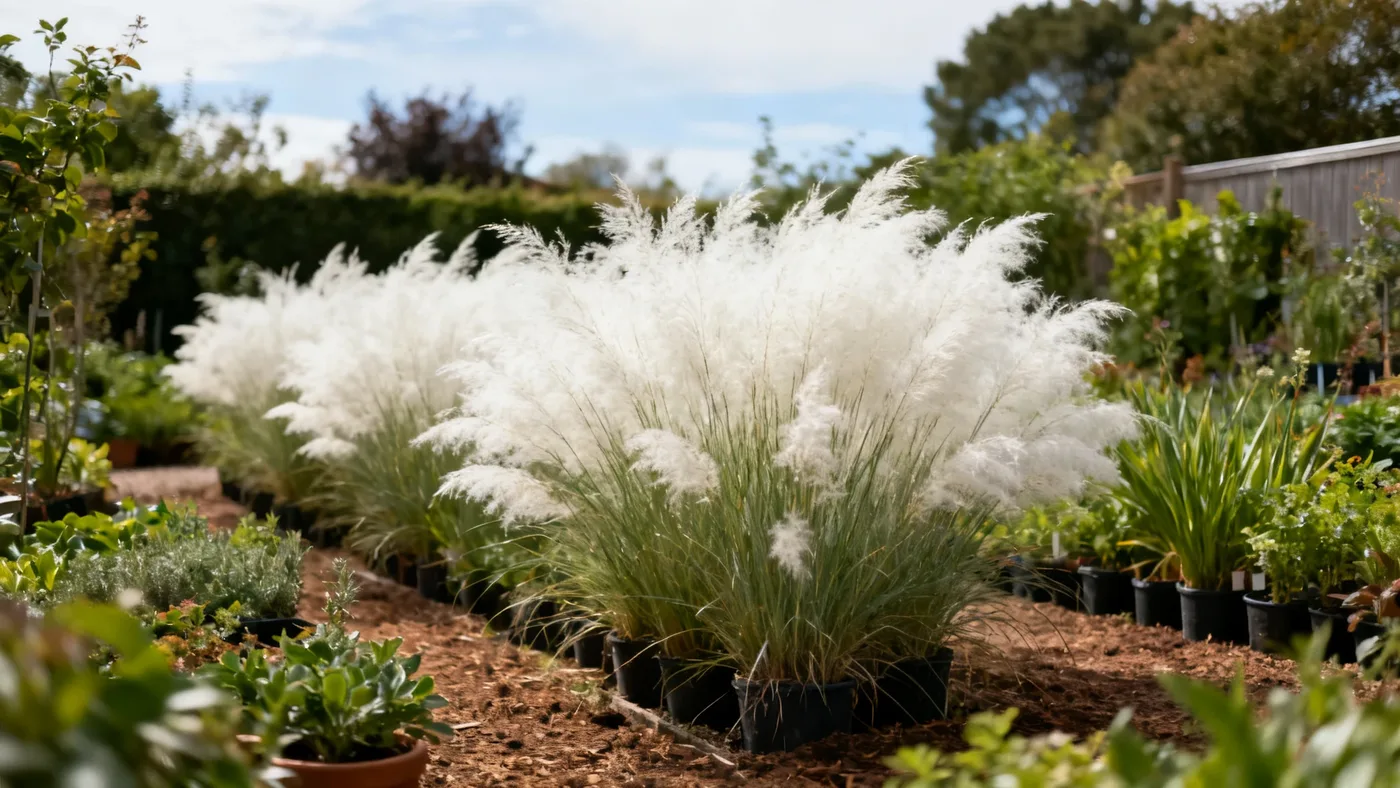
Why Is My White Cloud Muhly Grass Not Blooming?
It's late September or early October, and your White Cloud Muhly Grass should be putting on a cloud of white plumes right now. But instead, you see only green foliage, week after week. You're not alone. Lack of bloom is one of the most common complaints we hear from gardeners growing this beautiful native grass. The good news: once you identify the cause, it's usually straightforward to fix.
White Cloud Muhly Grass typically flowers in fall, roughly September through November, depending on your region and that year's weather patterns. The white, airy plumes are the defining feature of this cultivar. When they don't show up, something in the plant's environment has tipped the balance away from reproduction toward foliage alone. Let's walk through the main culprits and how to bring those plumes back.
What Causes Muhly Grass to Stop Blooming
White Cloud Muhly Grass blooms when three key conditions align: enough light, balanced water, and restrained fertility. Fail at any one of these, and your plant will skip flowers. The grass is also perennial and may take time to mature. A young plant (first or second year) often blooms lighter than an established clump. Age, however, is rarely the only reason for failure.
Diagnosing Your Plant: Materials You'll Need
Before you start troubleshooting, gather a few simple items to help you assess the situation:
- A light meter or smartphone light-meter app (optional but helpful)
- A soil moisture probe or a simple wooden stick
- A record of where your plant sits relative to nearby trees or structures
- Notes on how much you've watered and fertilized this year
- Photos of the plant from the past few weeks (if available)
- The hardiness zone map for your region
These tools help you gather concrete data rather than guess.
Step 1: Check Sun Exposure
White Cloud Muhly Grass needs full sun for best bloom. Full sun means at least 6 to 8 hours of direct, unobstructed sunlight per day, ideally 8 or more. The grass tolerates part shade with reduced flowering, but significantly reduced often means total failure to bloom.
- Stand where your grass is planted during mid-morning (around 10 a.m.) and mid-afternoon (around 2 p.m.). Note whether the foliage is in direct sun or shadow.
- Look for nearby trees, shrubs, or structures that have grown taller over the past year or two. Even a tree that was not a problem two years ago may be throwing shade now.
- If shade has crept in, prune back branches or consider moving the plant to a sunnier location in early spring (March through May, depending on your USDA zone, which ranges from 6 to 9 for this cultivar).
Expected result: If low light is the issue, you should see fuller, whiter plumes within one growing season after moving the plant to full sun or removing the shade source.
Step 2: Evaluate Your Watering Practice
Many gardeners over-water White Cloud Muhly Grass, especially in the first year after planting. The grass is drought tolerant once established but needs regular water during its first growing season to root in. After that, it should thrive on natural rainfall in most climates.
- Dig down 2 to 3 inches into the soil near the base of the plant with your finger or a probe.
- If the soil feels soggy or waterlogged, you are watering too much. Well-drained soil should feel moist but not slick.
- Check the foliage for signs of stress. Yellowing or browning leaves, especially at the base, often signal both overwatering and poor drainage rather than drought.
- If the plant is in year one after spring planting, maintain consistent moisture (not soggy) until fall. After that, water only during extended drought (more than two weeks without rain).
- Once the plant is two or more years old and fully established, rely on rainfall. Supplement only if leaves start to dull or lose their spring green tone.
Expected result: Reducing water frequency should restore healthy green foliage and allow the plant to channel energy into flowering rather than survival mode.
Step 3: Assess Fertilizer Use
Over-fertilizing is a common mistake that directly undermines bloom. Excess nitrogen pushes lush foliage at the expense of flowers and also makes growth leggy and floppy. This is especially true with warm-season grasses.
- Review what you applied this spring and summer. If you used a balanced fertilizer (such as a 10-10-10), look at the rate. The label should list pounds per 1,000 square feet. A light spring application (one quarter to half the recommended rate) is enough for this grass.
- If you applied fertilizer more than once, or at full strength, that is likely your problem.
- Going forward, apply only a light balanced-fertilizer application in spring (late February through March) before new growth emerges. One application per year is sufficient and often unnecessary at all.
- Never fertilize in summer or fall. Warm-season grasses shut down flowering if pushed too hard with nitrogen during their bloom window.
Expected result: Restraint on fertilizer should allow the plant to shift reproductive energy toward flowers in the fall.
Step 4: Check Soil Drainage and Look for Disease
Poor drainage not only leads to overwatering problems but also invites root rot and rust (a fungal disease that weakens the plant). These conditions can prevent bloom or cause dieback.
- After a heavy rain, observe whether water pools around the plant's base. If it does, that soil drains poorly. The grass prefers well-drained soil, though it adapts to sandy, loamy, and even some clay soils.
- Inspect the foliage for any rust-colored patches or spots, especially in humid summers or in areas with poor air circulation.
- If rust is present, improve air circulation by spacing the plant further from neighbors and thinning any surrounding vegetation. Rust is occasional and not usually severe, but it does stress the plant.
- If the soil is truly waterlogged or the plant shows signs of crown or root rot (mushy base, sudden collapse), dig it up and replant in a raised bed or improved soil with added sand and compost to boost drainage.
Expected result: Better drainage and rust management will allow the plant to grow vigorously and flower normally.
Step 5: Verify Your Pruning Timing
Pruning mistakes can delay or prevent bloom. White Cloud Muhly Grass must be cut back in late winter (February through March) before new growth emerges. Cut to a few inches above the ground. Pruning at the wrong time, or too late, can remove emerging flower buds.
- Mark your calendar each year for late February or early March (adjust the date for your zone).
- Cut the entire plant back to 2 to 3 inches tall. This is the only pruning needed during the year.
- Do not prune in summer, fall, or early spring. Any trimming after March can damage the plant or interfere with blooming.
- If you pruned late (April or later) this year, that may explain the lack of bloom. Plan correctly for next year.
Expected result: Proper late-winter pruning allows strong spring growth and normal fall blooming.
Step 6: Consider the Plant's Age
Although White Cloud Muhly Grass often blooms in its first fall after a spring planting, a young plant (first or second year) may produce fewer or lighter plumes than a mature clump. Full, dense plumes usually appear once the plant has been in the ground for 2 to 3 years and reached its mature size of roughly 3 to 4 feet tall (including bloom plumes) and 2 to 4 feet wide.
- If your plant is less than two years old, follow steps 1 through 5 above to rule out environmental problems. Then be patient.
- If your plant is less than a year old and shows green foliage with no plumes, it may simply be too young to bloom heavily. This is not a problem; the plant is establishing roots.
- If your plant is three or more years old and still not blooming, one of the other issues (sun, water, fertilizer, or disease) is at fault. Go back through steps 1 through 5.
Expected result: Mature, well-established plants bloom reliably every fall, often with increasingly full plumes over successive years.
Common Mistakes to Avoid
- Assuming one season of poor bloom means the plant will never flower. Recovery is usually one year away.
- Watering on a fixed schedule instead of checking soil moisture first.
- Using a high-nitrogen fertilizer meant for lawns (often 25-0-0 or similar ratios). Choose a balanced blend.
- Planting in shade and expecting full sun performance. This grass really does need good light.
- Pruning after March. Mark your calendar and prune early.
Why White Cloud Muhly Grass Won't Flower: The Big Picture
Once you've worked through these steps, you'll have identified which factor (or factors) held back bloom this year. The encouraging part is that all of these problems are fixable. Most gardens see a full return to flowering within a single season after correcting the issue. For a deeper dive into ongoing care, see our full White Cloud Muhly Grass care guide on sun, water, pruning, and more.
Quick Reference: Blooming Troubleshooting Checklist
| Issue | Diagnosis | Fix | Timeline |
|---|---|---|---|
| No plumes in late September | Full sun? | Move to full sun or remove shade | Next season (spring) |
| Yellowing or browning leaves | Soggy soil? | Reduce watering; improve drainage | 2-3 weeks |
| Lush green, floppy growth, no flowers | Over-fertilized? | Skip fertilizer or apply half rate next spring | Next season |
| Rust patches or brown spots | Poor air circulation or humidity | Thin nearby plants; space grass further from neighbors | Month to season |
| Pruned after March | Wrong timing | Prune only in late Feb-March | Next year |
| Less than 2 to 3 years old | Too young | Maintain care; blooms usually appear with age | 1-2 years |