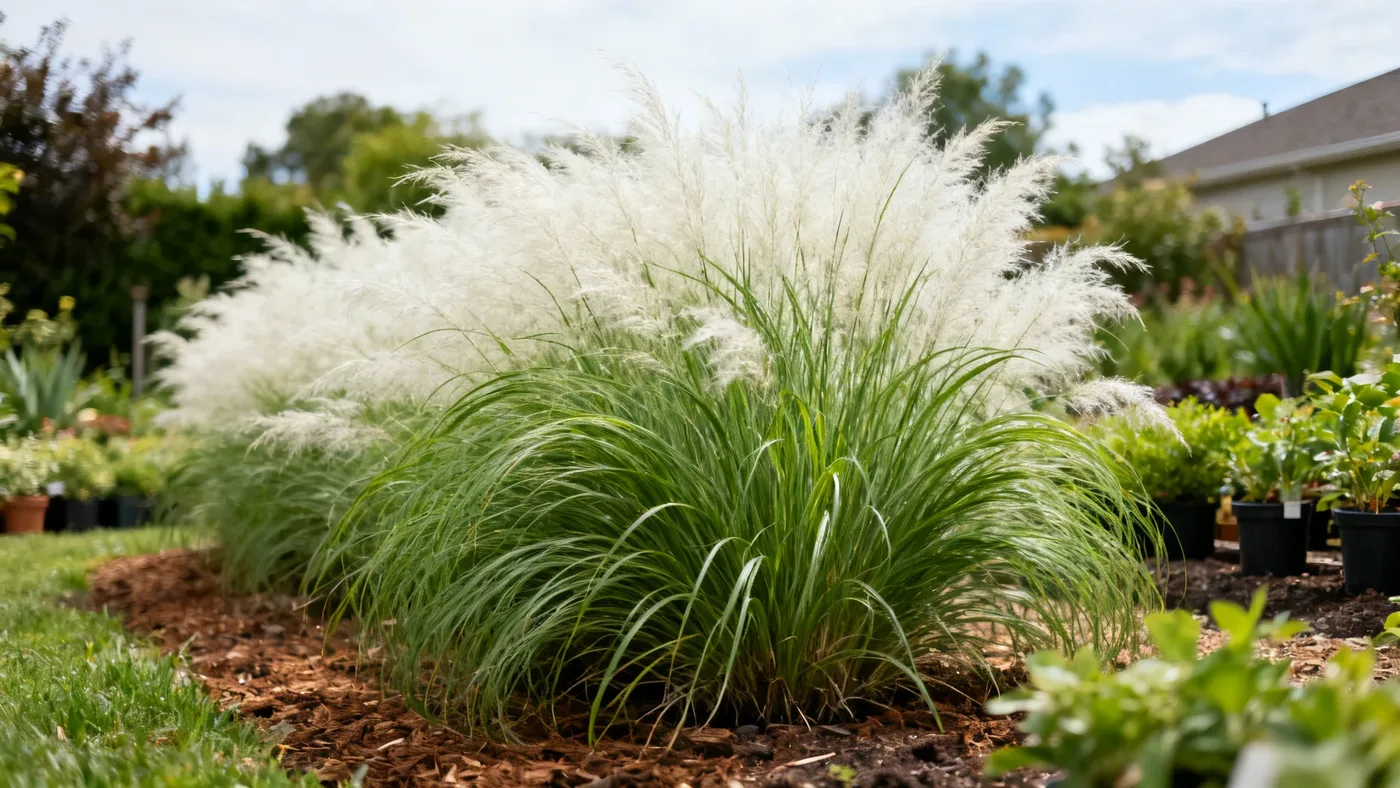
Does White Cloud Muhly Grass Die Back in Winter?
Yes, and it is supposed to. White Cloud Muhly Grass is a herbaceous perennial, which means the entire top of the plant is designed to die each year while the crown at the soil line and the roots below it stay alive. The brown, straw-colored clump standing in your garden in January is not a dead plant or a sick one. It is the plant in its normal winter state, and it will rebuild itself from the base once the soil warms.
White Cloud Muhly Grass
Adding to a border this year? Nursery-grown White Cloud Muhly Grass in quart, 2 gallon and 3 gallon sizes from $39.99, shipped in its container with our planting and care guides so you know what each season should look like.
That said, browning is also what a dying plant does, and the two look similar from ten feet away. This guide covers what normal dormancy looks like month by month, the three checks that separate dormant from dead, when green-up should actually happen in your zone, and the specific cases where brown foliage is a real warning.
What Normal Looks Like, Season by Season
The color change is gradual and it runs in a predictable order.
- Summer: the wiry, thread-like blades are green, forming a basal clump roughly 2 feet tall on a mature plant.
- Early to mid fall: the white plumes open, typically September through November, rising about a foot above the foliage. 'White Cloud' blooms a little later than the pink species it was selected from.
- Mid to late fall: the foliage turns copper, then shifts toward bronze and tan as temperatures drop. This is the plant's best-looking transition, not a decline. Our guide to White Cloud Muhly Grass fall color covers it in detail.
- Winter: the whole clump is tan to bronze and fully dormant. The flowering stalks and the aged plumes persist, which is why this grass is grown for winter interest at all.
- Spring: pale green shoots appear at the center of the crown, weeks later than most of the bed, and the clump rebuilds to full height and plume production by late summer and fall.
Nothing in that sequence involves green foliage surviving the winter. If you are waiting for an evergreen grass, this is not one.
Why It Dies Back: Warm-Season Grass Biology
Ornamental grasses split into two camps, and the difference explains everything about this plant's calendar. Cool-season grasses grow in spring and fall and often hold some green through winter. Warm-season grasses, and Muhlenbergia capillaris is one, grow only when soil is warm.
The threshold is measurable. Warm-season grasses go dormant when temperatures stay consistently below about 60 degrees Fahrenheit, and they resume growth once soil temperature holds steadily around 60 to 65 degrees. Air temperature gets the attention, but soil temperature is what the roots respond to, and soil lags weeks behind the air in spring.
The plant is not fighting the cold, it is waiting it out. Dying back is the strategy: pull resources into the crown and the fibrous roots in roughly the top foot of soil, abandon the leaves, and rebuild from the base when the season is worth it.
Dormant or Dead? Three Checks
Do these in order, and do them at the right time of year (see the next section before you judge anything).
1. Check the crown. This is the definitive test. Part the old foliage at the base of the clump and look at the crown, the small zone where blades meet roots. A living crown is firm and whitish or greenish. A dead one is brown, shriveled or soft and mushy to the touch. Firm and pale means the plant is alive regardless of how bad the top looks.
2. Do the tug test. Take a handful of blades and pull gently. Living, anchored roots resist. If the handful slides out with no resistance at all, that section has no root attachment left.
3. Look for new shoots at the base. Once your soil has warmed, pale green shoots should be visible pushing up through the center of the crown. An established plant that shows nothing at the base well after the neighboring warm-season plants have started is the one to worry about.
One caveat on all three: check the outer ring and the center separately. A dead center with a living outer ring on an old clump is congestion, not death, and it is the standard signal to divide.
When Green-Up Should Actually Happen
This is where most false alarms come from. White Cloud Muhly Grass is genuinely late, often the last thing in the bed to show life, and gardeners write it off in April when it was never going to move until May.
- Zones 8 and 9: soil warms early, so expect new growth from March.
- Zone 7: April is typical.
- Zone 6: late April into May is normal, and a cold, wet spring pushes it later still.
Two factors delay it further. Old foliage left standing shades and insulates the crown, which can delay the crown warming and its subsequent growth by as much as three weeks. And a cool, cloudy spring simply keeps soil below the threshold longer. If you cut the clump back in late February or early March as recommended and pulled the mulch back from the crown, you have already removed the delay you control.
The practical rule: do not conclude a plant is dead until well into the growing season, when soil is reliably warm and other warm-season plants near it are growing. In zone 6 that means June, not April.
What to Do While It Is Dormant
Almost nothing, and that is the point.
- Leave the foliage standing. It insulates the crown, it holds the winter interest you planted it for, and songbirds eat the seed. Do not cut in fall.
- Do not water. A dormant clump is not drawing water, and saturated winter soil is a far bigger threat to the crown than dryness.
- Do not fertilize. There is nothing growing to use it.
- Cut back in late winter. Late February through early March, down to 2 to 4 inches, before new growth emerges. When and how to cut back White Cloud Muhly Grass has the method.
- Mulch only if the plant is young or your zone is marginal, and only after the ground has frozen. Winter care for White Cloud Muhly Grass covers the timing and depth.
When Brown Is Not Dormancy
Dormant browning has a signature: it is even across the whole clump, it happens on schedule as temperatures fall, and the crown stays firm. Brown that breaks any of those patterns is worth investigating.
Browning in summer. Out-of-season browning means something is wrong now. The usual causes are drought stress on a plant that has not established yet, root or crown rot from poor drainage, or rust in humid conditions with poor air circulation. Our guide to common White Cloud Muhly Grass problems works through each one.
Patchy browning rather than even browning. Dormancy is uniform. Patches point to a localized cause: a wet spot, a fungal issue, or physical damage.
A dead center with a living ring. Normal in a clump that is several years old, and it means the plant needs dividing rather than rescuing. See dividing and propagating White Cloud Muhly Grass for how and when.
A mushy crown after a wet winter. This is the real winter killer in zones 6 and 7, and it is a drainage problem rather than a cold one. Soggy soil around a dormant crown rots it. Our guide to the best soil for White Cloud Muhly Grass covers fixing the site.
No growth at all by early summer. At that point the verdict is in.
If It Really Did Die
Before replanting in the same spot, find out what happened, because the same site will do the same thing again. Check the two likeliest causes: does water stand there for days after rain, and does the spot actually get 6 to 8 hours of direct sun? Poor drainage kills dormant crowns, and inadequate light produces a weak plant that goes into winter with no reserves.
Fix drainage by planting on a slight slope or in a raised bed rather than by digging a deeper hole, which just creates a sump. Then replant in spring, which gives a new plant a full season of root growth before its first winter. How to plant White Cloud Muhly Grass for best results covers the installation, and sun requirements explained covers the light test.
Quick Reference: Die-Back and Dormancy
| Question | Answer |
|---|---|
| Does it die back in winter? | Yes. All top growth dies; the crown and roots stay alive |
| Is it evergreen anywhere? | No. It is a herbaceous warm-season perennial |
| Normal winter color | Copper in fall, then bronze to tan through winter |
| Do the plumes persist? | Yes. Flowering stalks and aged plumes stand into winter |
| Dormancy trigger | Temperatures consistently below about 60 F |
| Green-up trigger | Soil temperature holding around 60 to 65 F |
| Green-up timing, zones 8 to 9 | From March |
| Green-up timing, zone 7 | Typically April |
| Green-up timing, zone 6 | Late April into May |
| Delay from uncut old foliage | Up to about 3 weeks |
| Alive test 1 | Crown firm and whitish or greenish, not brown and mushy |
| Alive test 2 | Blades resist a gentle tug |
| Alive test 3 | Pale shoots at the center of the crown once soil is warm |
| When to declare it dead | No growth by early summer, after soil is reliably warm |
| Winter action required | None. Leave foliage up, cut back late February to early March |
The short version: brown in winter is the plant working correctly, and patience in spring is the main skill. Check the crown if you need reassurance, leave the clump standing until late winter, and let the soil reach 60 degrees before you write anything off. For the year-round routine, see our complete White Cloud Muhly Grass care guide.
White Cloud Muhly Grass
If a clump genuinely did not make it, fix the drainage first and replant in spring. Nursery-grown White Cloud Muhly Grass in quart, 2 gallon and 3 gallon sizes, shipped in its nursery container with growing guides included, so the new plant gets a full season of roots before its first winter.