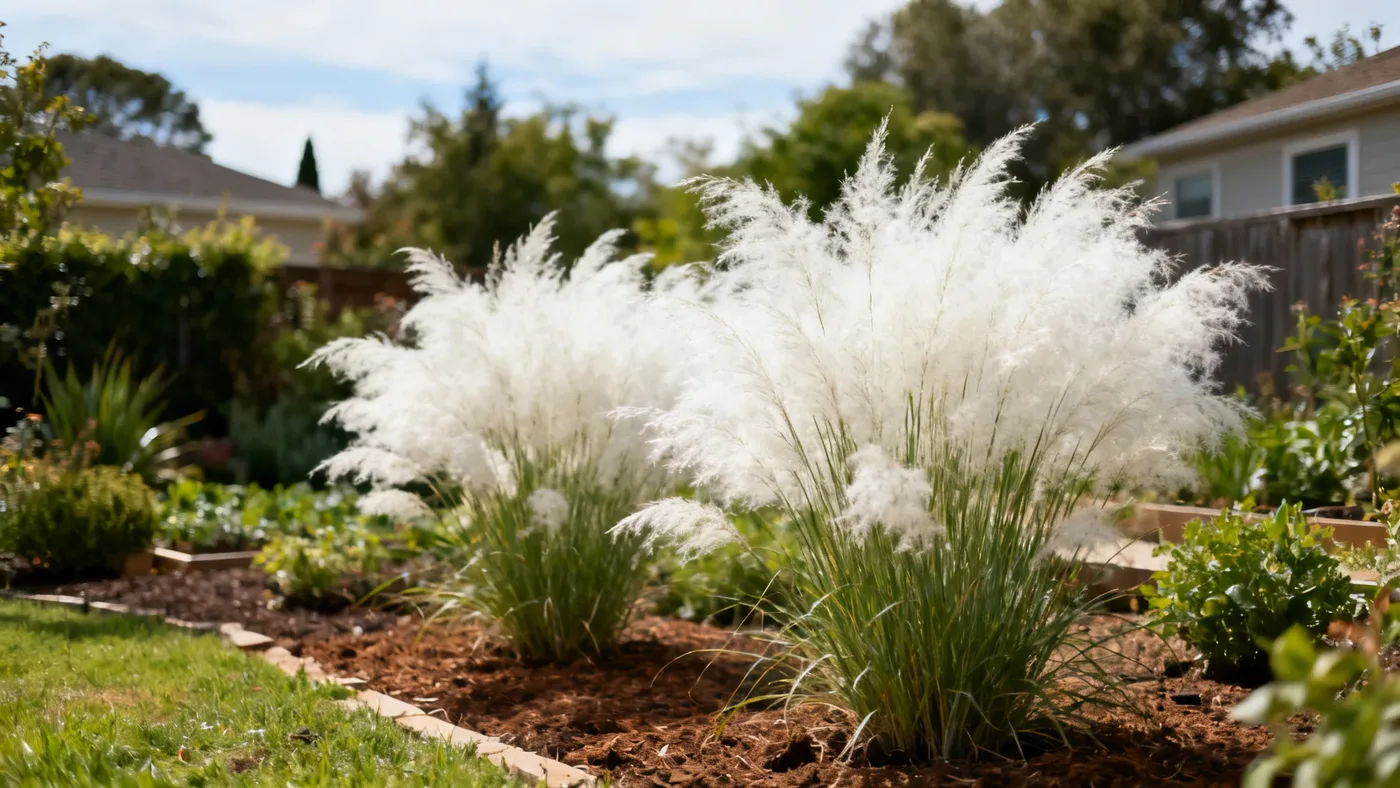
Winter Care: Protecting White Cloud Muhly Grass From Cold
White Cloud Muhly Grass is hardy through USDA zones 6 to 9, and an established clump in the middle of that range needs no winter help at all. The work worth doing in winter is narrower than most care articles suggest: leave the foliage alone, mulch at the right moment rather than the convenient one, keep winter water away from the crown, and treat a first-year plant and a potted plant as different cases. Everything else is optional.
White Cloud Muhly Grass
Planting in spring or early fall gives a new clump a full season of root growth before its first winter, which is the single best cold protection there is. Nursery-grown plants in quart, 2 gallon and 3 gallon sizes from $39.99, shipped in the container with our planting and care guides.
This guide covers what to do and when, zone by zone, including what to do during a cold snap that runs below your normal winter low. For whether the browning you are seeing is a problem at all, see does White Cloud Muhly Grass die back in winter.
What Winter Actually Does to This Grass
This is a warm-season grass. It grows when soil is warm, generally above about 60 degrees Fahrenheit, and it shuts down when soil drops below that. The top growth is meant to die: blades that are green all summer turn copper in fall, then bronze and tan, while the plant withdraws resources into the crown and the fibrous roots sitting in roughly the top foot of soil.
So winter protection here is not about protecting leaves. It is about protecting a dormant crown at the soil line from two specific hazards: repeated freezing and thawing that physically lifts it out of the ground, and standing winter moisture that rots it. Cold air temperature, within the plant's rated zones, is the least of the three.
Leave the Foliage Standing: The One Rule That Matters
Do not cut this grass down in fall. The standing clump is the plant's own insulation, a dense thatch of wiry blades 18 to 36 inches long that traps air and snow over the crown and buffers the temperature swings that do the real damage. Cutting in autumn strips that off and exposes the crown for the entire winter.
Three other things come free with leaving it up. The flowering stalks persist into winter, so you keep the white plumes and bronze foliage that are the plant's best season. Songbirds and small mammals eat the seed. And the clumping habit gives good winter cover for wildlife at a time of year when cover is scarce.
The single cost of leaving foliage standing is a slightly later spring: old foliage left on the plant can delay the crown warming and its subsequent growth by as much as three weeks. That is the argument for cutting back in late winter rather than in spring once growth has begun, and it is exactly the timing our guide on when and how to cut back White Cloud Muhly Grass recommends: late February through early March, before new growth emerges.
Zone by Zone: Who Needs to Do Anything
The 2023 USDA hardiness zone map defines zones by average annual extreme minimum temperature, drawn from 1991 to 2020 data. Zone 6a bottoms out at minus 10 to minus 5 degrees Fahrenheit, zone 6b at minus 5 to 0, zone 7a at 0 to 5. Those are the numbers an established clump has to survive.
- Zones 8 and 9: nothing to do. Leave the foliage up, cut back in late winter, and skip the mulch entirely if your soil drains well.
- Zone 7: nothing required for established plants. Mulch first-year plantings.
- Zone 6: the northern edge of reliable hardiness. Established clumps in well-drained soil come through without help. Mulch any plant in its first or second winter, and favor a sheltered spot over an exposed, windswept one when you are choosing where to plant.
- Zone 5: outside the reliable range, and survival is inconsistent even with help. If you are trying it, plant in spring only so the clump gets a full season of roots, mulch 2 to 4 inches after the ground freezes, and choose the best-drained, most sheltered spot you have. Treat losses as possible.
Mulching: Depth, Timing and the Mistake Everyone Makes
Winter mulch is not the same job as summer mulch. Its purpose is to hold soil temperature steady so the ground stops freezing and thawing in cycles. That alternating freeze and thaw is what heaves plants upward, lifting the crown and roots clear of the soil and leaving them exposed to freezing air and drying wind.
Two details decide whether it works:
- Depth: 2 to 4 inches. Less does not insulate. More traps moisture against the crown and invites rot, which in a grass that dislikes wet feet is a real risk.
- Timing: after the ground has frozen, not before. This is the part most gardeners get backwards. Mulch applied in October, while the soil is still warm, delays the freeze and actually encourages the heaving cycle it was meant to prevent. Wait for the first hard frost and for temperatures to settle below freezing, then apply.
Keep the mulch a few inches clear of the center of the clump so air can move across the crown, and use a coarse material such as shredded bark or wood chips rather than anything that mats down into a wet blanket. Pull the mulch back from the crown in late winter, at the same visit when you cut the clump back, so spring sun can warm the root zone on schedule.
The First Winter After Planting Is the Risky One
A plant set out this year has roots that have barely left the original root ball, so it has far less soil contact than an established clump and considerably less buffer. Nearly all winter losses in zones 6 and 7 are first-winter losses.
Four things stack the odds:
- Plant early enough. Spring planting in zones 6 and 7 gives four to five months of root growth before frost. If you are planting in fall, get it in by September so roots develop before the soil cools. Our planting guide covers the full installation.
- Water into winter if autumn is dry. A root ball that goes into freezing weather dry is more vulnerable than one that goes in moist. One deep watering before the ground freezes is enough; see watering White Cloud Muhly Grass for the establishment schedule.
- Stop feeding by midsummer. Late-season fertilizer pushes soft growth that has not hardened off and that freezes more readily. This grass tolerates lean soil well and rarely needs feeding at all, as our guide on fertilizing White Cloud Muhly Grass explains.
- Do not tidy it. A first-year plant needs its foliage more than an established one does.
Drainage Beats Cold
In zones 6 and 7 the plant that dies over winter has usually drowned rather than frozen. A dormant crown sitting in soil that stays saturated through a wet winter rots, and freezing water in that soil makes it worse. The species is adapted to sandy or rocky, dry to medium, well-drained ground and prefers neutral to slightly acidic soil.
If your site holds water for days after rain, the highest-value winter protection you can give this plant has nothing to do with winter: improve the drainage, or move it to a slope or raised bed in spring. Our guide to the best soil for White Cloud Muhly Grass covers how to test and fix it, and common problems and how to fix them covers crown rot once it starts.
A Cold Snap Below Your Normal Range
An Arctic outbreak that takes a zone 7 garden to minus 5 for two nights is a different event from a normal winter, and short-term protection is worth the effort for a young clump or a marginal-zone planting.
- Mound loose material over the crown. Pile shredded leaves, straw or extra bark mulch 6 to 8 inches deep directly over the center of the clump, right before the cold arrives.
- Lay evergreen boughs over the top. Cut conifer branches hold the mound in place, trap air, and let moisture through. Discarded Christmas tree branches are ideal.
- Do not wrap plastic against the plant. Sheet plastic laid on the crown condenses moisture and turns a cold problem into a rot problem. Breathable material only.
- Remove the extra material once the snap breaks. Rake the mound back down to a normal 2 to 4 inches. Leaving 8 inches of wet leaves over a crown through February is how you lose a plant you just saved.
Snow, Ice and De-icing Salt
Snow is an asset. It insulates the crown better than anything you can buy, and the wiry blades are flexible enough to bend under snow load and spring back. There is no need to brush it off, and shoveling snow onto a dormant clump does no harm.
Salt is more forgiving here than with most perennials. The USDA fact sheet rates hairawn muhly as having high tolerance for salinity, which is why it is planted so widely along coasts, and it handles salt spray well. It is not, however, tolerant of standing salt water, so a clump at the low point of a driveway where salted meltwater pools all winter is in a genuinely bad spot. Salt spray from a road is fine; a salt pile or a drainage sink is not.
Potted Plants Are a Separate Problem
A container changes the arithmetic completely. Roots are less cold-hardy than shoots to begin with, and research shows the root ball in an unprotected container can approach the air temperature around it, with none of the buffering that surrounding earth provides in a bed. A grass that shrugs off zone 6 in the ground can be killed in a pot in the same garden.
The short version: sink the pot into the ground, group pots against a sheltered wall and wrap them, or move them into an unheated garage or shed for the winter. The full method, including the dormancy temperatures to aim for, is in growing White Cloud Muhly Grass in pots and containers long-term.
What Not to Do in Winter
Do not cut it back in fall. The most common and most costly winter mistake, and the easiest to avoid.
Do not mulch before the ground freezes. Early mulch delays the freeze and promotes the heaving it was supposed to stop.
Do not pile mulch over the crown. Around it, not on it, except as temporary cold-snap cover that you remove.
Do not fertilize in fall. Soft, unhardened growth is less cold-hardy than lean growth.
Do not water a dormant clump in the ground. It is not using water, and saturated winter soil is the actual threat.
Do not panic at brown foliage. Brown is the correct winter color for this plant.
Quick Reference: Winter Care Calendar
| When | What to do |
|---|---|
| September | Last month for fall planting in zones 6 to 7; stop any feeding |
| October to November | Leave all foliage and plumes standing; one deep watering if autumn has been dry |
| After the first hard frost | Apply 2 to 4 inches of coarse mulch around, not over, the crown |
| December to January | Nothing. No water, no feeding, no pruning |
| During a cold snap below zone range | Mound 6 to 8 inches of leaves or straw over the crown plus evergreen boughs; remove after |
| Late February to early March | Cut the clump back to 2 to 4 inches; pull mulch back from the crown |
| Established plants, zones 6 to 9 | No winter protection required |
| First-winter plants, zones 6 to 7 | Mulch 2 to 4 inches after the ground freezes |
| Zone 5 attempts | Spring planting only, sheltered site, mulch, accept some risk |
| Container plants, zones 6 to 7 | Sink, wrap, or move to an unheated shed or garage |
| Snow and ice | Leave it; snow insulates and the foliage rebounds |
| De-icing salt | Spray is tolerated; avoid sites where salted meltwater pools |
Winter care for this grass is mostly restraint. Leave the clump standing, mulch at the right moment if the plant is young or the zone is marginal, keep the crown out of standing water, and let the plant do what a prairie grass has always done. For the full year-round routine, see our complete White Cloud Muhly Grass care guide.
White Cloud Muhly Grass
Spring and early fall are the planting windows that set a clump up to winter well. Order nursery-grown White Cloud Muhly Grass in quart, 2 gallon or 3 gallon sizes, shipped in its nursery container with growing guides included, and plant while there is still season left for roots.